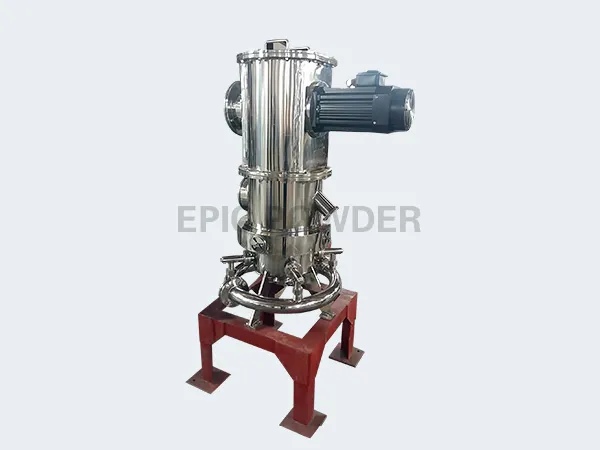
Single Rotor Horizontal Jet Mill
A Single Rotor Horizontal Fluidized Bed Jet Mill is an advanced ultrafine powder grinding and classifying system designed for high-purity material processing. By injecting high-pressure compressed air or inert gas through specialized nozzles into the grinding chamber, the equipment creates a dense, multi-directional fluidized bed. Materials accelerate within supersonic gas streams, achieving efficient self-grinding through high-velocity particle-to-particle collisions.
An integrated horizontal turbo classifier continuously separates qualified fine particles from coarse fractions, guaranteeing strict particle size control without heat buildup or mechanical wear.
Feature / MetricOverview SpecificationGrinding PrincipleSupersonic gas-jet collision in a fluidized bedClassifier LayoutSingle horizontal axis designFineness RangeD50: 0.5 to 15 µm (adjustable)Contamination PreventionZero metallic contamination options (Ceramic/Polyurethane)System OperationFully enclosed negative-pressure pneumatic transport
Working Principle of Single Rotor Horizontal Jet Mill
Our Single Rotor Horizontal Fluidized Bed Jet Mill combines ultra-high-velocity gas streams with dynamic classification to achieve precise, contamination-free particle size reduction.
Fluidized Bed Jet Grinding Mechanism
The milling action relies entirely on particle-to-particle impact within a high-pressure environment:
High-Speed Jet Streams: Filtered compressed air or inert gas enters the grinding chamber through strategically angled nozzles at supersonic speeds.
Fluidized Collision Zone: Raw material expands into a dynamic fluidized bed, forcing particles to collide directly with each other at high velocity.
Zero Contamination: Because grinding occurs through particle-on-particle impact rather than friction against equipment walls, wear is minimized and product purity is preserved.
Single Rotor Classification and Separation Process
Once the material is pulverized, our horizontal classification system guarantees exact particle size distribution:
Centrifugal Separation: The horizontally mounted dynamic rotor turns at variable speeds, generating a balance between centrifugal force and drag force.
Coarse Material Rejection: Oversized particles cannot pass the centrifugal force field and fall back into the fluidized bed jet mill chamber for re-grinding.
Fine Product Collection: On-spec fine particles move through the classifier wheel blades via airflow suction and advance directly to the collector.
Core Structural Features
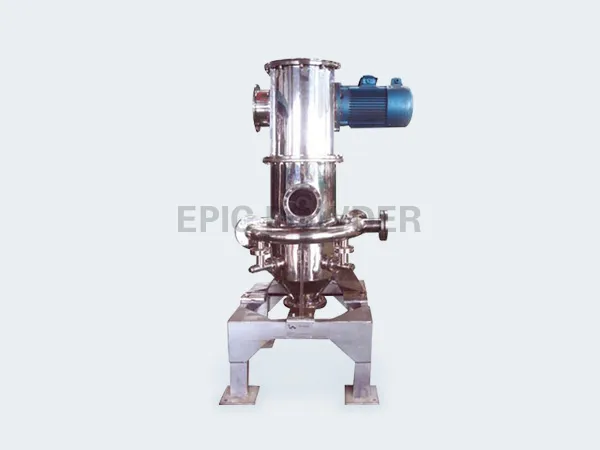
Horizontal Classifier Assembly: Positioned horizontally to ensure consistent aerodynamic force across the wheel width, providing sharp top-size cut-offs and reliable fineness control.
Peripheral Supersonic Nozzles: Strategically arranged along the grinding chamber wall to concentrate jet energy at the fluidization center for maximum collision efficiency.
Contamination-Free Lining Options: Lined with high-purity alumina ceramic, silicon carbide, or polyurethane to eliminate iron contamination during abrasive processing.
Negative Pressure Dust Control: Operates under sealed negative pressure to guarantee dust-free workplace conditions and high material recovery rates.
Quick-Opening Design: Designed with ergonomic clamp access for fast disassembly, thorough washdowns, and short maintenance downtime during batch changes.
Main Factors Affecting Milling Performance
Getting peak performance out of our Single Rotor Horizontal Fluidized Bed Jet Mill comes down to controlling a few key operational variables. By fine-tuning these parameters, you can achieve exact particle sizes, maximize throughput, and keep energy consumption low.
Air Pressure and Compressed Gas Flow Rate
Compressed gas is the primary energy source inside the grinding chamber. Tuning these gas parameters directly controls impact energy and overall efficiency:
Grinding Pressure: Higher air pressure accelerates the gas jets, driving higher particle-to-particle impact velocities. This delivers finer grinding and faster size reduction.
Gas Flow Rate: Sufficient gas volume maintains proper fluidization inside the bed, keeping raw material suspended for continuous, high-efficiency collision.
Energy Balance: Setting the right pressure-to-flow ratio prevents energy waste while hitting your exact target micron size.
Rotor Classifier Speed and Adjustment
The single horizontal rotor classifier determines the exact top-size cutoff for your finished powder:
Centrifugal Separation: Higher rotor speeds generate stronger centrifugal force, sending coarser particles back to the grinding zone while letting fine particles pass through.
Precision Control: Adjusting the classifier speed via a variable frequency drive (VFD) allows real-time particle size adjustments without shutting down production.
Narrow PSD: Controlled rotor speeds ensure a sharp particle size distribution (PSD) and eliminate oversized contamination in the final product.
Material Feed Rate and Physical Properties
Consistent material feeding maintains proper bed density and stable jet dynamics inside the mill chamber:
FactorImpact on Jet MillingRecommended AdjustmentFeed RateOverfeeding chokes the bed and coarsens output; underfeeding wastes compressed air.Use a controlled, metered feeder to match system grinding capacity.Moisture ContentHigh moisture leads to particle agglomeration and nozzle buildup.Keep raw material feed moisture levels consistently low.Hardness & FriabilityHarder materials demand higher jet kinetic energy to fracture.Increase air pressure and adjust feed speed based on material hardness.
Technical Parameters of Jet Mill
| parameter/ Model | MQW03 | MQW06 | MQW10 | MQW20 | MQW30 | MQW40 | MQW60 | MQW80 | MQW120 | MQW160 |
|---|---|---|---|---|---|---|---|---|---|---|
| Feeding Size(mm) | <1 | <2 | <2 | <2 | <2 | <3 | <3 | <3 | <3 | <3 |
| Production Capacity(kg/h) | 0.3~10 | 10~150 | 20~300 | 40~600 | 100~900 | 200~1200 | 500~2000 | 800~3000 | 1500~6000 | 2000~8000 |
| Particle size(D97:μm) | 3~45 | 3~45 | 3~45 | 3~45 | 3~45 | 3~45 | 3~45 | 3~45 | 3~45 | 3~45 |
| Classifier motor (kw) | 2.2 | 3 | 5.5/7.5 | 7.5/11 | 11/15 | 15/7.5x3 | 7.5x3 | 11x3 | 15x3 | 15x4 |
| Air consumption(m³/min) | 3 | 6 | 10 | 20 | 30 | 40 | 60 | 80 | 120 | 160 |
| Air pressure(Mpa) | 0.6~1 | 0.6~1 | 0.6~1 | 0.6~1 | 0.6~1 | 0.6~1 | 0.6~1 | 0.6~1 | 0.6~1 | 0.6~1 |
Related Cases
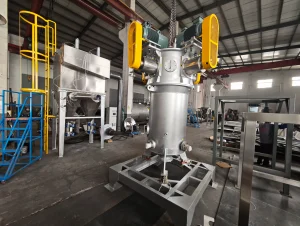
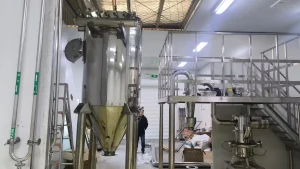
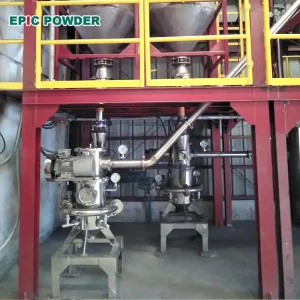
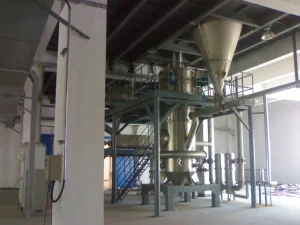
Get Your Jet Mill Price in 24 Hours:
Learn More About jet mills

Why Choose Jet Milling for LMFP Cathode Materials?

Why Does Spherical Silver Powder Agglomerate Before Sintering?