Lithium Battery Material Fluidized Bed Jet Mill
What is a Lithium Battery Material Fluidized Bed Jet Mill?
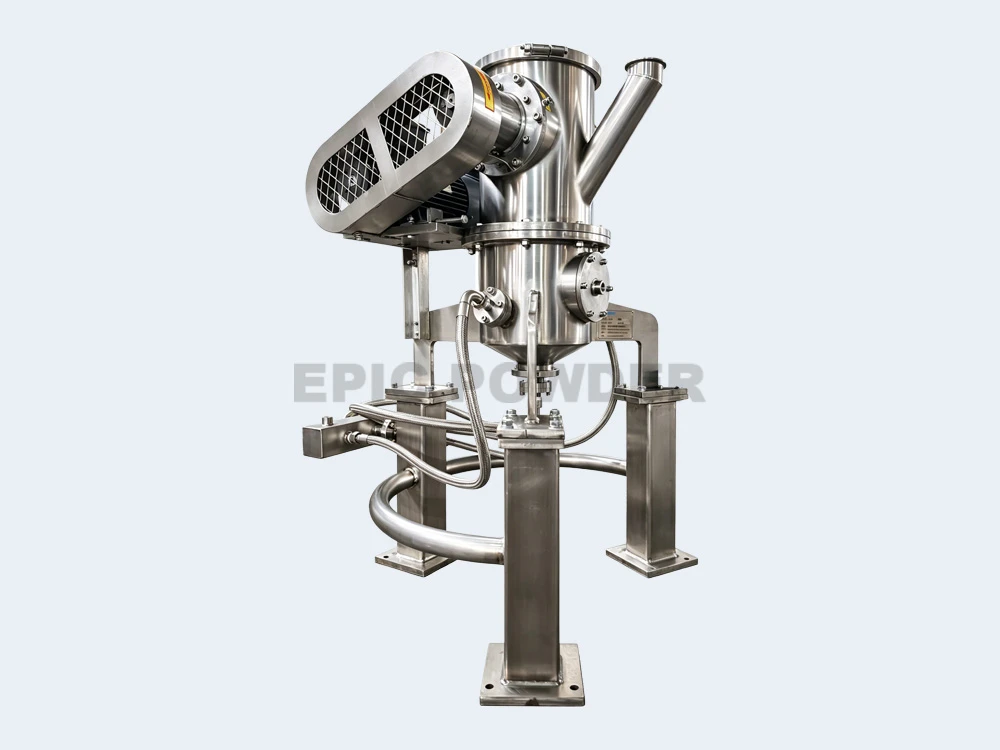
A Lithium Battery Material Fluidized Bed Jet Mill is an advanced ultra-fine grinding system engineered specifically to meet the stringent purity and particle size distribution (PSD) requirements of the modern energy storage industry. By combining compressed air fluidization with integrated high-efficiency air classification, this technology achieves micron and sub-micron particle reduction without thermal degradation or mechanical contamination.
Working Principle of Fluidized Bed Jet Mills
Understanding how a Lithium Battery Material Fluidized Bed Jet Mill operates comes down to controlled kinetic energy. We design our systems to harness high-velocity airflow to reduce particle sizes without mechanical contact, protecting ultra-sensitive battery compounds throughout the entire pulverization process.
Fluidization and Compressed Air Acceleration
The milling cycle begins by introducing filtered compressed air or inert gas (such as nitrogen) into the grinding chamber through strategically angled supersonic nozzles.
Bed Fluidization: The high-pressure gas expands rapidly, lifting and suspending raw battery materials into a turbulent, fluid-like state inside the vessel.
Velocity Conversion: Pressure energy converts into kinetic energy, accelerating particles toward the center of the grinding zone at speeds exceeding Mach 1.
Thermal Stability: The expanding gas creates a natural cooling effect, preventing heat buildup that could otherwise degrade temperature-sensitive battery chemistries.
Inter-Particle Collision and Grinding Mechanism
Unlike traditional mechanical mills that strike raw materials against metal blades or chamber walls, our fluidized bed jet mill relies strictly on particle-on-particle collisions.
Self-Attrition Grinding: Accelerated particles cross paths at the central focal point of the chamber, shattering each other upon high-speed impact.
Zero Contamination: Because grinding occurs in mid-air away from the chamber walls, metal contact is eliminated—keeping iron contamination and foreign micro-impurities near zero.
Uniform Morphology: High-energy particle impacts yield rounded, consistent particle shapes ideal for dense battery slurry mixing and cathode/anode coating processes.
Integrated Air Classification for Particle Size Control
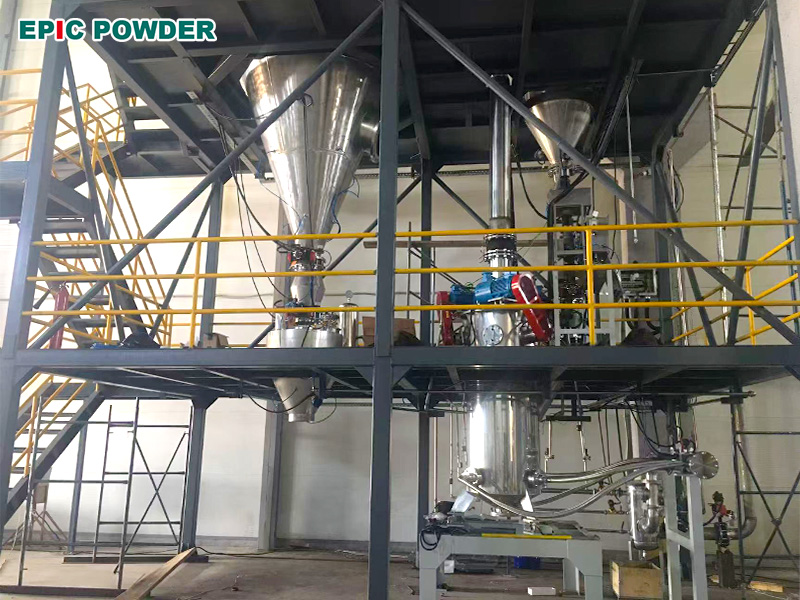
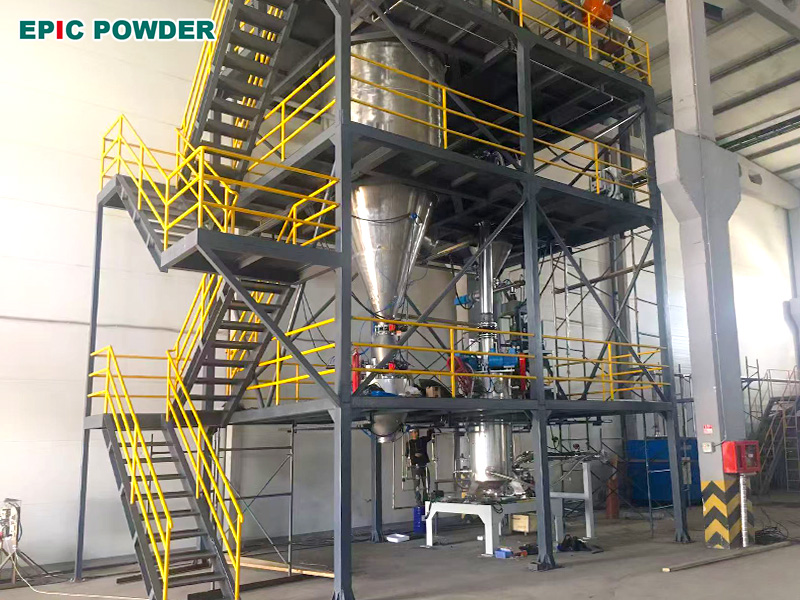
An integrated dynamic air classifier sits directly above the fluidization zone to guarantee strict top-size limits and a narrow particle size distribution (PSD).
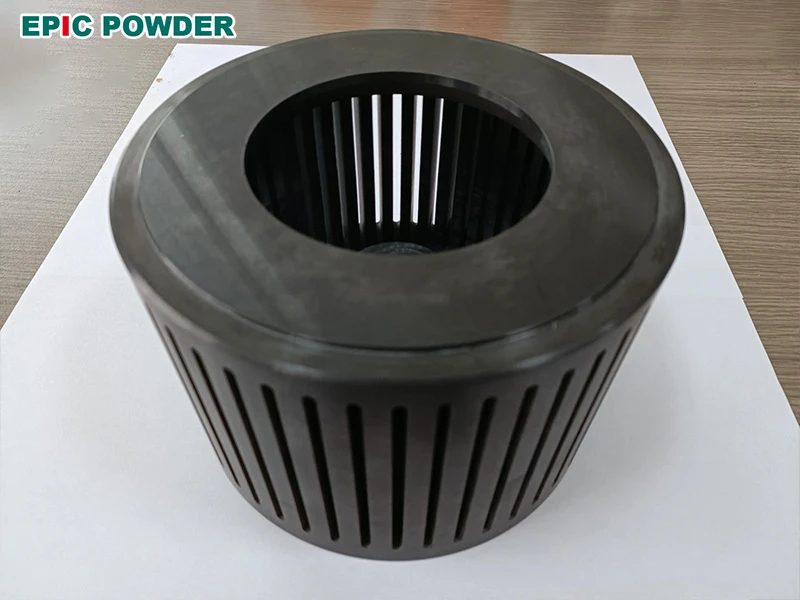
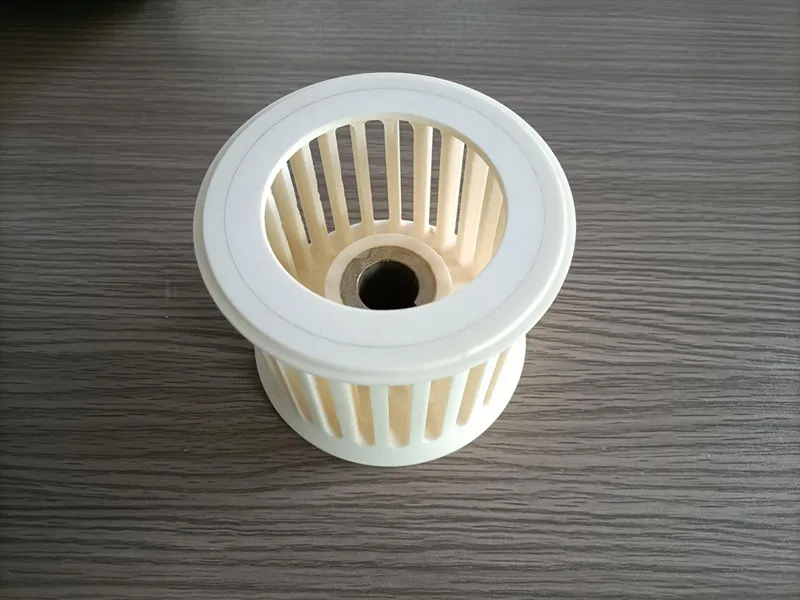
Classification StageMechanism & Operational ActionCentrifugal RejectionThe high-speed classifier wheel generates precise centrifugal forces that reject oversized particles, dropping them back into the grinding bed.Aerodynamic DragTarget-sized fine particles overcome centrifugal resistance, drawn through the classifier blades into the cyclone collector.Real-Time TuningVariable frequency drive (VFD) controls allow instant adjustments to classifier speed, giving exact control over critical D50 and D97 parameters.
Key Features and Performance Advantages
We designed our Lithium Battery Material Fluidized Bed Jet Mill to meet the strict performance demands of modern energy storage manufacturing. By combining fluid dynamics with advanced ceramic engineering, we deliver unmatched processing efficiency and particle quality.
FeatureTechnical HighlightPrimary Battery BenefitPurity ControlFull ceramic flow path ($Al_2O_3, SiC, ZrO_2$)Prevents metallic contamination and micro-shortsPrecision SizingIntegrated dynamic air classificationDelivers ultra-narrow PSD without over-grindingThermal StabilityThermodynamic expansion coolingProtects heat-sensitive compounds from degradationWear ResistanceHeavy-duty engineering ceramicsExtends service life and lowers maintenance costs
Zero Metallic Contamination for High-Purity Battery Materials
Metal contamination causes micro-short circuits and safety failures in lithium-ion cells. We eliminate this risk at every point in the process: Full Ceramic Lining: All material-contact surfaces, including nozzle tips, grinding chambers, and classifier wheels, use high-purity ceramics. Self-Milling Collision: Particles grind against each other in mid-air rather than against metallic walls, keeping free iron pick-up virtually at zero.
Precise Particle Size Control and Narrow Distribution
Electrode packing density and battery rate performance depend on uniform particle sizing: Narrow PSD Target: Our built-in dynamic classifier removes oversized particles while preventing excessive ultra-fine dust. Flexible Adjustment: Instantly fine-tune median size (D50) and top-size cutoffs (D97) by adjusting the classifier wheel speed through variable frequency control.
Cool Grinding Process Ideal for Heat-Sensitive Compounds
Grinding active cathode precursor and anode compounds requires strict temperature management: Joule-Thomson Cooling Effect: The rapid expansion of compressed air through the nozzles creates a natural cooling effect within the grinding zone. Zero Thermal Damage: Low operating temperatures prevent melting, phase transitions, oxidation, or thermal degradation of delicate lithium compounds.
High Wear Resistance and Durable Construction
Abrasive battery precursor materials quickly erode standard milling equipment. We build our systems for maximum uptime: Hardened Ceramic Shielding: High-grade structural ceramics withstand continuous high-velocity impact from abrasive materials. Long Service Life: Durable construction reduces component wear, cuts spare parts consumption, and maximizes your production line availability.
Technical Parameters of Jet Mill
| parameter/ Model | MQW03 | MQW06 | MQW10 | MQW20 | MQW30 | MQW40 | MQW60 | MQW80 | MQW120 | MQW160 |
|---|---|---|---|---|---|---|---|---|---|---|
| Feeding Size(mm) | <1 | <2 | <2 | <2 | <2 | <3 | <3 | <3 | <3 | <3 |
| Production Capacity(kg/h) | 0.3~10 | 10~150 | 20~300 | 40~600 | 100~900 | 200~1200 | 500~2000 | 800~3000 | 1500~6000 | 2000~8000 |
| Particle size(D97:μm) | 3~45 | 3~45 | 3~45 | 3~45 | 3~45 | 3~45 | 3~45 | 3~45 | 3~45 | 3~45 |
| Classifier motor (kw) | 2.2 | 3 | 5.5/7.5 | 7.5/11 | 11/15 | 15/7.5x3 | 7.5x3 | 11x3 | 15x3 | 15x4 |
| Air consumption(m³/min) | 3 | 6 | 10 | 20 | 30 | 40 | 60 | 80 | 120 | 160 |
| Air pressure(Mpa) | 0.6~1 | 0.6~1 | 0.6~1 | 0.6~1 | 0.6~1 | 0.6~1 | 0.6~1 | 0.6~1 | 0.6~1 | 0.6~1 |
Related Cases
Get Your Jet Mill Price in 24 Hours:
Learn More About jet mills
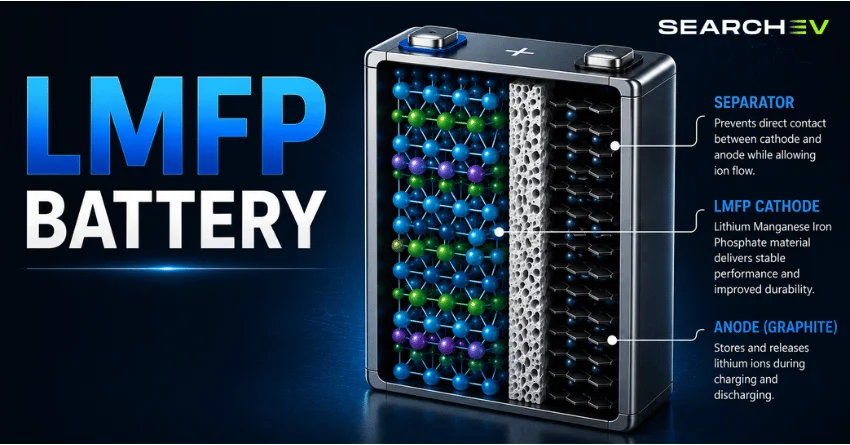
Why Choose Jet Milling for LMFP Cathode Materials?
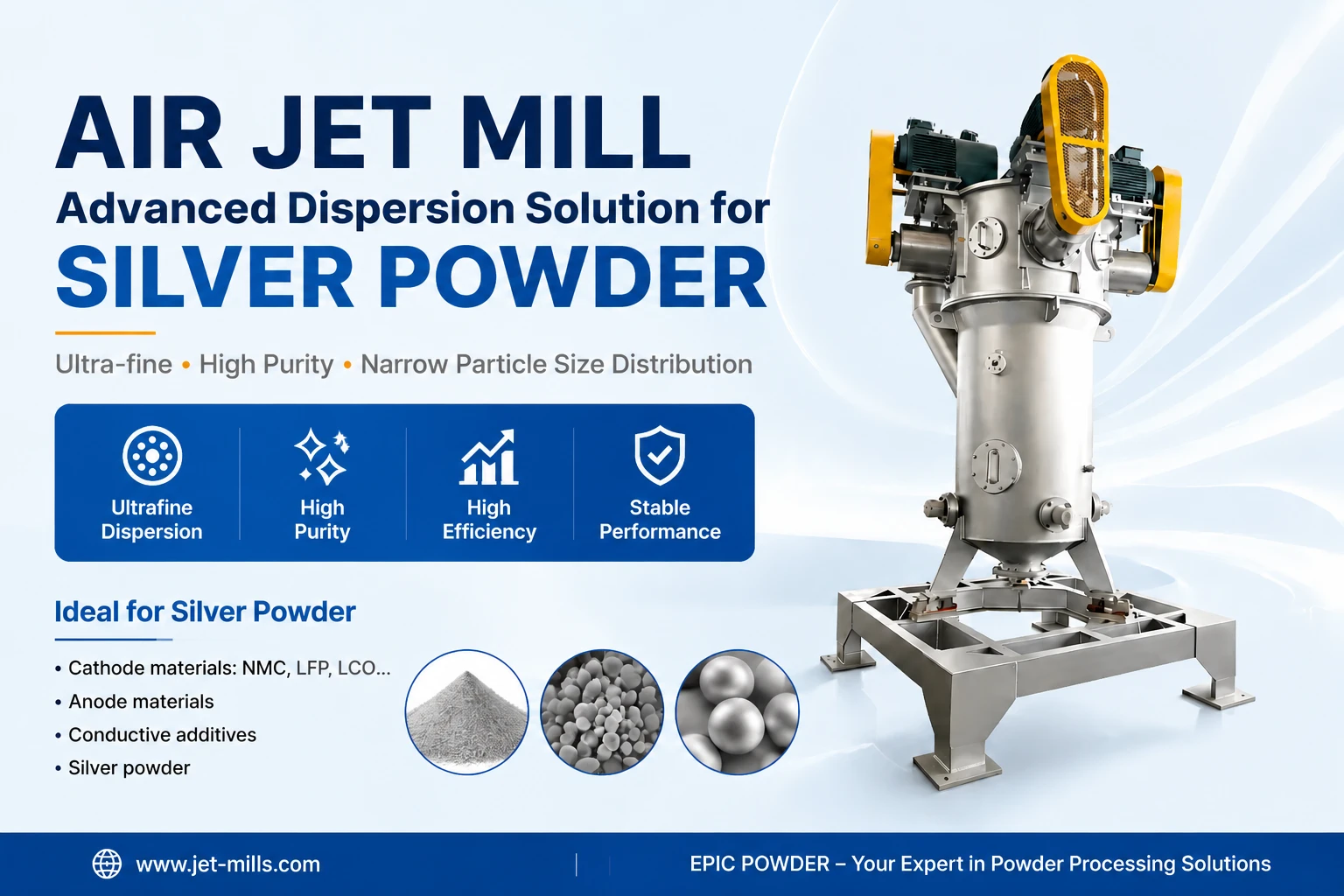
Why Does Spherical Silver Powder Agglomerate Before Sintering?