
Barite, or barium sulfate (BaSO4), is one of the heaviest non-metallic minerals. Its density and chemical stability make it valuable in oilfield drilling muds, radiation shielding concrete, and high-performance fillers. The difference between commodity barite and premium barite is usually particle size. Jet milling is the technology that pushes barite into the ultrafine, high-value range.
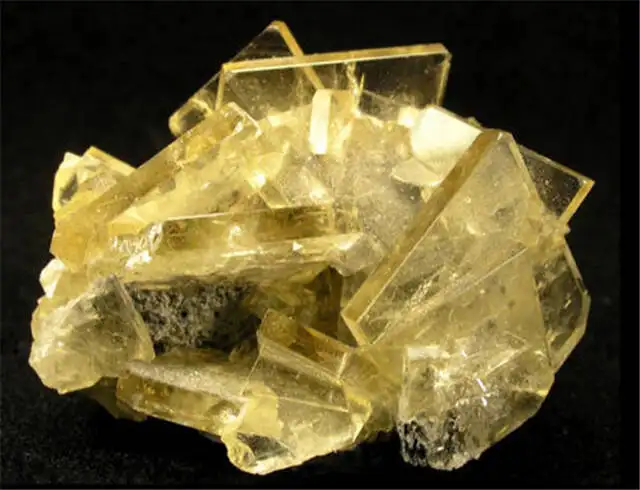
What Barite Is and Why Fineness Controls Value
Pure barium sulfate has a specific gravity of about 4.5 g/cm³. Commercial drilling-grade barite is expected to reach at least 4.2 g/cm³ to meet API 13A specifications. It is soft—roughly 3 to 3.5 on the Mohs scale—and chemically inert, so it resists acids and alkalis. These properties make it easy to grind. However, but they also mean the powder must be clean and correctly sized for each application.
API drilling barite is ground so that at least 97% passes through a 75 μm screen and less than 30% is below 6 μm. That size works for weighting drilling mud, but it is a commodity market. Higher-value products need much tighter control. Plastic, paint, and radiation-shielding grades often require D97 values of 10–45 μm. Precipitated barium sulfate fillers for plastics and coatings run at D50 values from 0.1 to 0.7 μm.
Oilfield Drilling: Weighting Mud
Drilling mud carries cuttings to the surface, lubricates the bit, and maintains hydrostatic pressure to prevent blowouts. Barite is the standard weighting agent because it is dense, inexpensive, and non-reactive. A typical API-grade product has a specific gravity of 4.2 g/cm³ and is milled to 200 mesh.
Most API barite is produced with roller mills or ball mills because the volume is high and the size specification is coarse. Jet mills enter the picture when operators need cleaner, finer barite for specialized drilling fluids, for barite recovery, or for upgrading low-grade ore. A jet mill can remove coarse contaminants and narrow the particle size distribution, which improves suspension stability and reduces sag in the mud column.
Radiation Shielding: Dense Concrete and Mortar
Barite absorbs X-rays and gamma radiation because barium has a high atomic number. Builders add barite aggregate and barite powder to concrete and mortar to shield hospital radiology rooms, laboratories, and nuclear facilities. Barite concrete typically reaches densities of 3.2 to 3.8 t/m³, compared with about 2.3 t/m³ for ordinary concrete.
Fineness matters in shielding mixes. Ultrafine barite fills the voids between coarse aggregate particles and increases the density of the cured concrete. A more uniform particle distribution also gives a smoother finished surface, which is important in rooms that must be sealed and cleaned. Jet-milled barite with a D97 below 45 μm is often used as the fine fraction in these high-density mixes.
Plastic, Paint, and Powder Coating Fillers
Barium sulfate adds weight, improves sound damping, increases surface hardness, and acts as a titanium dioxide extender in plastics and coatings. In polypropylene, PVC, ABS, and engineering plastics, it improves dimensional stability and surface gloss without the health concerns of some metal-based fillers. Precipitated barium sulfate grades for plastics typically show D50 values from 0.1 to 0.7 μm and BaSO4 contents of 98.5% or higher.
Ground ultrafine barite competes with precipitated grades in many applications. Jet milling can narrow the particle size distribution and eliminate oversize particles that would otherwise create streaks or gloss defects in powder coatings. Coarser ground barite, with D50 options around 2, 5, 10, or 20 μm, serves as a lower-cost filler for plastics, rubber, brake pads, and sound-deadening panels.
Why a Jet Mill Fits Ultrafine Barite
Jet mills grind by particle-on-particle impact in a high-velocity gas stream. The Epic Powder Non-metallic Mineral Fluidized Bed Jet Mill suspends dry barite in a fluidized bed and accelerates it through Laval nozzles. Because the grinding action occurs between particles and not against metal media, the mill keeps iron contamination low. Ceramic linings in alumina, silicon carbide, or zirconia are available when whiteness is critical.
The integrated dynamic classifier controls the top cut. Coarse particles return to the grinding zone, and fines leave immediately. It prevents over-grinding and keeps the particle size distribution steep. The MQW series covers D97 values from 2 to 45 μm and capacities from 0.3 kg/h on the MQW03 laboratory unit up to 8,000 kg/h on the MQW160 production unit.
Low-temperature operation is another advantage. Expanding compressed air cools the grinding chamber, so heat-sensitive additives or surface-treatment agents are not degraded. For barite that is flammable, explosive, or prone to oxidation, the mill can run in a closed inert-gas loop.
Matching the Mill to the Application
For API drilling barite or coarse construction aggregate, a roller mill or ball mill is usually the right choice because of capacity and cost. For premium grades—radiation-shielding fines, plastic fillers, paint and powder coating grades, or high-purity chemical barium sulfate—the jet mill is the core equipment. It produces the narrow distribution, controlled top cut, and low contamination that buyers of these grades require.
Epic Powder has applied this approach in practice. The Barium Sulfate Grinding Jet Mill Project in Hebei used a fluidized bed jet mill to produce ultrafine barium sulfate for industrial filler applications. More details on the equipment line are available on the Fluidized Bed Jet Mill page.
Epic Powder
Epic Powder designs grinding and classifying systems for minerals, chemicals, food, and pharmaceuticals. With more than 20 years of powder processing experience, we match the right mill to your target particle size and capacity. Tell us about your material and we will recommend a tested solution.
Request a Barite Grinding Test
If you produce barite or barium sulfate and need a reliable ultrafine grinding line, send your target D50, D97, capacity, and purity requirements to Epic Powder. The team will select the right jet mill, classifier, and wear-protection configuration for your product specification.

“Thanks for reading. I hope my article helps. Please leave a comment down below. You may also contact EPIC Powder online customer representative Zelda for any further inquiries.”
— Jason Wang, Engineer