
A talc specification usually carries one number, the D97. The figure that decides the sale sits outside the specification. It is the plate structure that survives the mill. A jet mill starts with an advantage, since particles break against each other and no steel media presses on the plates. The advantage is not automatic, because the wrong pressure breaks plates as well. This article covers the settings that move fineness and plate integrity, together with the checks that separate the two.
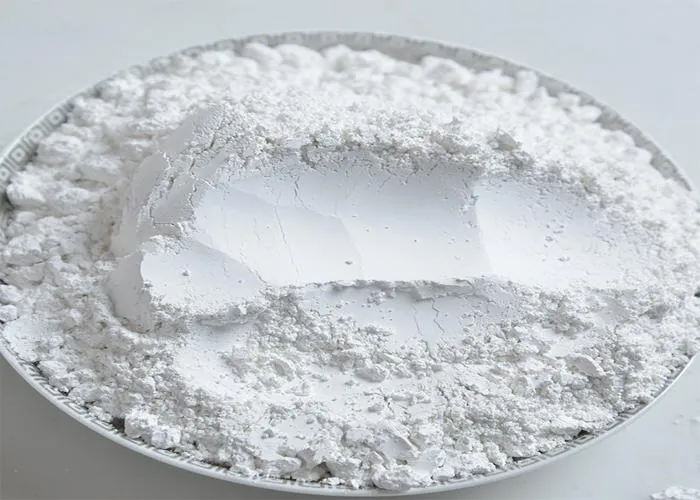
What the Buyer Measures
A plastics compounder buys stiffness, and stiffness comes from plates that carry load along their surface. A paint formulator buys barrier performance, since overlapping plates lengthen the vapour path through the film. A cosmetics buyer pays for the soapy feel, which comes from the same plate habit. None of these properties appears in a D97 figure.
Aspect ratio is the ratio of plate diameter to plate thickness, and a laser sizer cannot report it. The instrument returns an equivalent spherical diameter, which is blind to thickness. Two powders with the same D97 can therefore differ by a factor of two. A specification written only in D97 leaves the paid property unmeasured. Scanning electron microscopy gives the aspect ratio, and several hundred plates give a distribution.
Table 1. The figures a talc buyer measures, and how each one is obtained
| Metric | What it describes | How it is measured | Why the buyer cares |
|---|---|---|---|
| D97 | Top cut of the distribution | Laser diffraction, with the dispersion pressure stated | Coarse particles cause specks and gloss defects |
| D50 | Median size | Laser diffraction on the same sample | Sets filler loading and dispersion behaviour |
| Aspect ratio | Plate diameter divided by thickness | SEM image analysis over several hundred plates | Stiffness in plastics, barrier in coatings |
| Bulk density | Packing of the dry powder | Standard funnel method | Feeding behaviour and dispersion |
| Whiteness | Colour of the powder | R457 or blue-light reflectance | Grade level and selling price |
| Residue | Material left on a sieve | 45 µm test sieve | Coarse carry-over that the top cut can hide |
Figures describe the properties under test. Each one needs the method and the sample preparation to be comparable between suppliers.
The Settings That Matter in a Jet Mill
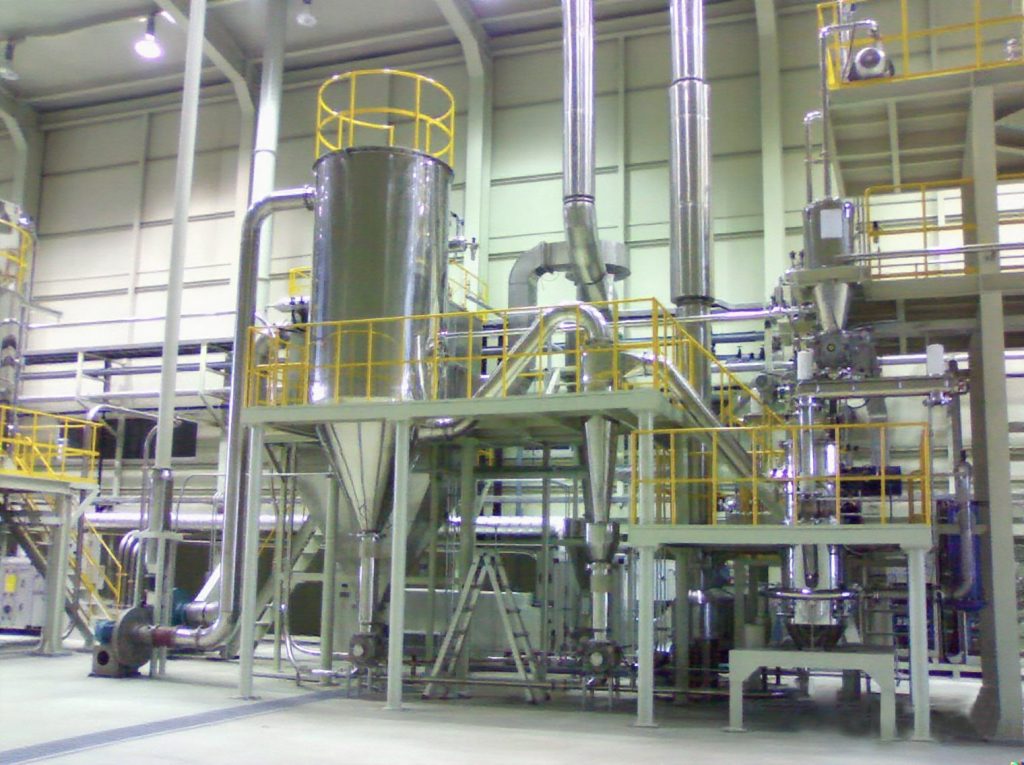
Four settings decide what leaves a fluidized bed jet mill. Nozzle pressure sets collision energy, and classifier speed sets the top cut. Feed rate sets the load on the classification zone, and feed size sets the passes a particle needs. Each setting moves fineness and plate integrity together, so no change is free. The comparison with a ball mill covers the routes where impact does the breaking.
Nozzle pressure on the MQW range runs from 0.6 to 1.0 MPa. Higher pressure raises collision energy and pulls the distribution finer. Past a point the extra energy goes into edge breakage. The plate then loses diameter without losing thickness. The result is a finer D97 at a lower aspect ratio, which is not what the buyer paid for.
Classifier speed sets the cut and carries most grade changes on a running line. A higher speed returns more particles to the bed, so the product gets finer. Every extra pass adds collisions, and the plate population degrades with each one. Feed rate works the other way, since overloading the classification zone lets coarse particles through. The D97 rises and the top cut widens.
Feed size is fixed upstream, and the model table asks for material below 1 to 3 mm. A coarser feed needs more passes to reach the same cut. That costs capacity and plate integrity together. Back pressure matters less in the specification and more in practice. An unstable flow field shifts the cut while the panel shows the same readings.
Table 2. What each setting does to fineness and to the plates
| Setting | Raising it | Lowering it | What the change costs |
|---|---|---|---|
| Nozzle pressure | Collision energy rises, distribution moves finer | Distribution moves coarser | Above the working window the plate edges chip |
| Classifier speed | Top cut falls, circulating load rises | Top cut rises, output increases | Each extra pass adds one more round of collisions |
| Feed rate | Output rises | Output falls and energy per ton rises | Overload pushes oversize into the product |
| Feed size | Fewer passes, higher capacity | More passes at the same cut | Plate damage accumulates pass by pass |
| Back pressure | Flow field becomes unstable | Cut drifts with the load | The drift shows in the sieve test, not on the panel |
Direction of change holds for talc on a fluidized bed machine. Magnitude needs a test on the actual feed.
Fineness and Plate Integrity Trade Against Each Other
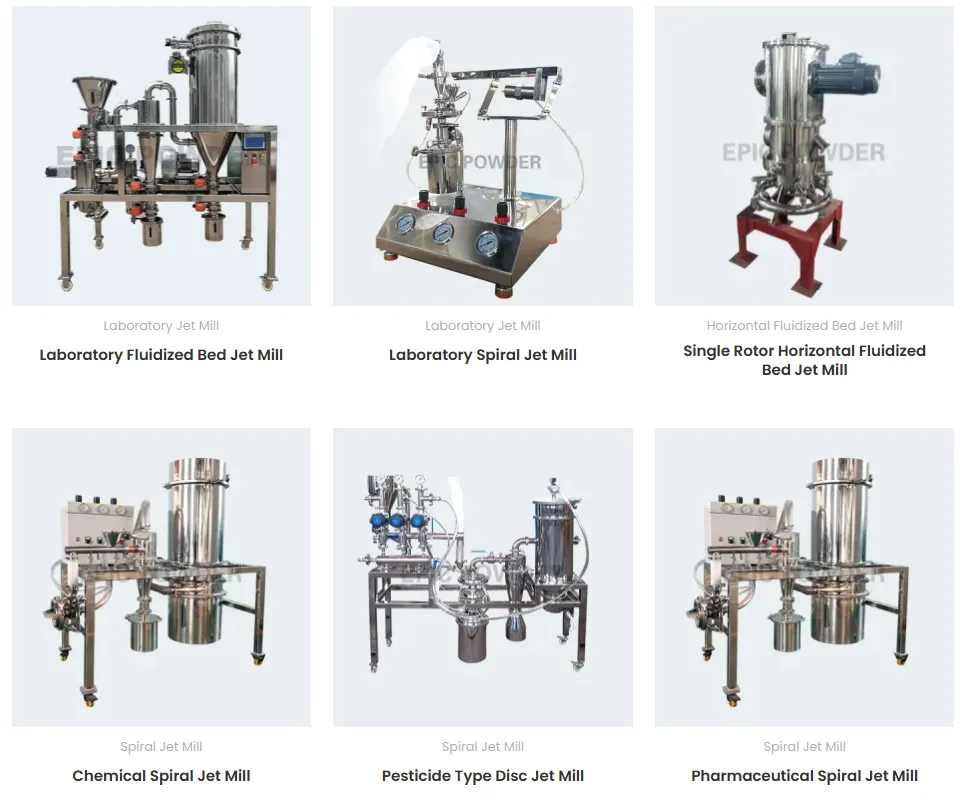
A target one grade finer always costs something. The particle spends longer in the mill, meets more collisions, and the plate edges chip. The useful target is the coarsest distribution that still passes the customer’s tests. That number comes from the application, and it usually sits coarser than the first enquiry suggests.
Plastics filler grades commonly sit at D97 10 to 45 µm. Coating grades run finer, and the talc in coatings guide covers that grade map in detail. A D97 below about 5 µm needs test data before anyone promises an aspect ratio. The collision count rises steeply at that end of the range.
Table 3. Three working bands and what each one demands at acceptance
| Band | D97 | Typical use | Plate risk | Acceptance focus |
|---|---|---|---|---|
| Coarse | 30 to 45 µm | Plastics filler, ceramics | Low | Residue and dispersion |
| Medium | 10 to 25 µm | Plastics reinforcement, paper | Moderate | D97 and aspect ratio sampled together |
| Fine | 3 to 8 µm | Coatings, premium plastics | High | SEM aspect ratio and energy per ton |
Bands describe common commercial grades. The application decides the actual cut.
Model Selection Follows the Finest Grade
The MQW range covers 0.3 to 8,000 kg/h across ten models. Every model lists D97 3 to 45 µm. Capacity is not a single number, since the same machine produces more at a coarse cut. A line with four grades should be sized on the finest grade it must hold. Sizing on the average leaves that grade short, and the shortfall shows up in monthly output.
A line for automotive plastics used an MQW40 on pre-crushed talc at D97 10 µm. It held 1,200 kg/h, which is the top of that model’s range. The unit ran under negative pressure, so dust stayed inside the circuit. Nozzle angle and classifier speed held the cut through the run.
Table 4. MQW models, excerpt from the published table
| Model | Capacity (kg/h) | Feed size (mm) | D97 (µm) | Air (m³/min) | Classifier motor (kW) |
|---|---|---|---|---|---|
| MQW10 | 20 to 300 | <2 | 3 to 45 | 10 | 5.5 / 7.5 |
| MQW20 | 40 to 600 | <2 | 3 to 45 | 20 | 7.5 / 11 |
| MQW40 | 200 to 1200 | <3 | 3 to 45 | 40 | 15 / 7.5 × 3 |
| MQW60 | 500 to 2000 | <3 | 3 to 45 | 60 | 7.5 × 3 |
| MQW120 | 1500 to 6000 | <3 | 3 to 45 | 120 | 15 × 3 |
Source: the non-metallic mineral jet mill page. Capacity depends on material and target cut.
What to Record at Acceptance
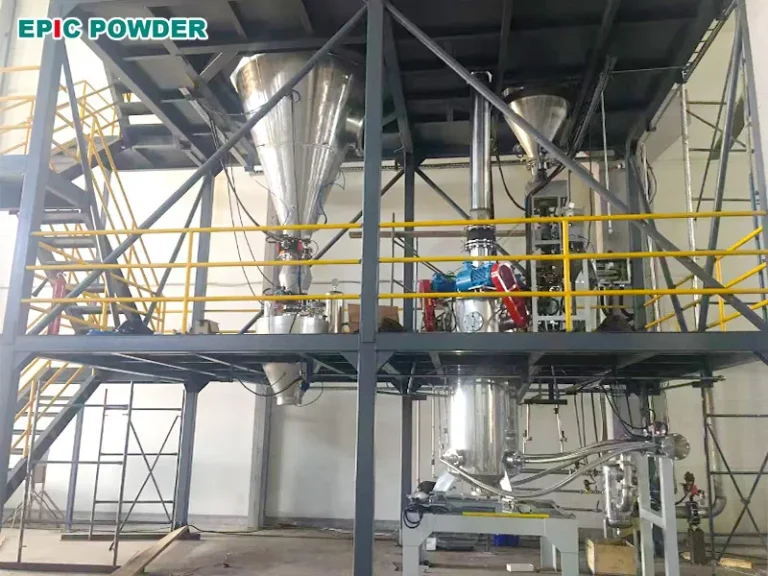
Acceptance needs more than a certificate carrying one D97 value. Eight records cover the points where a talc circuit usually drifts, and each one can be written into the order. They also give the next grade change a reference point. That shortens the trial which follows a new specification.
The eight are the feed size distribution and the D97 with its dispersion pressure. They include a D50, an SEM aspect ratio count over 300 plates, and the bulk density. The list also carries whiteness and the residue on a 45 µm sieve. Energy per ton and the four-hour D97 spread complete it, and the energy guide covers where that bill goes.
A spread inside the agreed band confirms that the classifier holds the cut under load. Whiteness needs a material decision as much as a process one. Contact parts can be supplied in alumina, zirconia or silicon carbide, and each of them lowers the metal pick-up. The choice follows the abrasion the feed causes and the budget for liners. A high whiteness grade should settle the liner material before the order, since a retrofit costs a shutdown.
What to Send With a Sample
A test returns a measured curve when five items arrive with the sample. Send the material with its pre-crushed size and the target D97. Add a D50 and any plate requirement with a reference micrograph. The remaining items are the tonnage, the grades per week, and the whiteness the product must hold.
The report then states the curve on that material and the aspect ratio at the target cut. It also names the capacity the model can hold and the liner the run used. The whiteness figure can then be read against that construction. A quotation built without those five items tends to miss at commissioning. By then the material is already in the silo.
About EPIC Powder. We build jet mills for talc and other non-metallic minerals. The MQW range covers 0.3 to 8,000 kg/h with a top cut from 3 to 45 µm. Contact parts can be supplied in ceramic. Classifier speed is set from the PLC, so every grade change follows the recipe.
Every project starts with a test on the customer’s material. The report gives the curve before and after, together with the aspect ratio at the target cut. The product range lists the models and their working windows. Write to mineral@epic-powder.com with the five items above.
Epic Powder
Epic Powder is specialized in fine powder processing technology for mineral industry, chemical industry, food industry, pharama industry, etc. Our team has more than 20 years experience in Various powders processing and had ever designed and installed the biggest Jet Mill Line for ultra-fine barite powder production line in China.
We are a professional supplier of powder processing projects, especially powder milling, powder classifying, powder dispersing, powder classifying, powder surface treatment and waste recycling. We supply consultancy, testing, project design, machines, commissioning and training.

“Thanks for reading. I hope my article helps. Please leave a comment down below. You may also contact EPIC Powder online customer representative Molly for any further inquiries.”
— Emily Chen, Senior Engineer