
You have done your research, compared specifications, and narrowed down your options. The next question is not about the machine itself. It is about everything that happens between signing the order and running production. How long until the equipment arrives? Who handles the installation? What if something goes wrong six months later?
This article walks through the full post-purchase process for a jet mill, from factory lead time to on-site commissioning and after-sales support. We write this based on real project experience, not marketing assumptions.
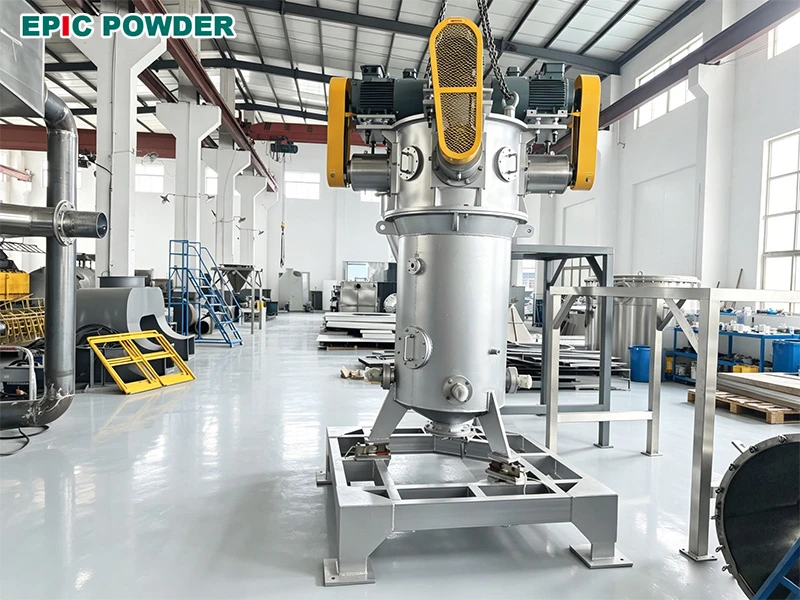
How Long Does Jet Mill Delivery Take?
Lead time depends on whether your machine needs custom modifications. For standard jet mills without special requirements, the typical delivery window is 3 months from order confirmation.
If your application involves abrasive materials, explosion protection, or other specialized configurations, expect 5 to 6 months. These orders require additional engineering review, certified components, and in some cases third-party inspections before shipment.
What counts as “special configuration”? Common examples include:
1. Ceramic or tungsten carbide linings for wear protection
2. ATEX or IECEx compliant designs for combustible dust
3. Nitrogen closed-loop systems for oxygen-sensitive materials
4. High-temperature or cryogenic grinding setups
5. Integrated classifier systems with multi-stage separation
If your project is time-sensitive, let your supplier know during the quotation stage. Some manufacturers keep semi-finished components in stock for popular models, which can shave 2 to 3 weeks off the standard lead time.
Before the Machine Arrives: Site Preparation
One of the most overlooked parts of a jet mill purchase is what happens on your end before delivery. The machine does not just roll off the truck and start grinding. Your site needs to be ready.
Foundation and Space Requirements
Jet mills are not massive pieces of equipment, but they do need a solid, level foundation. Your supplier should provide a foundation drawing with anchor bolt positions, load data, and recommended concrete specifications. If your floor has vibration issues or uneven settling, address this before the machine arrives.
Also check the clearance around the machine. You need access for maintenance, filter replacement, and eventual rotor inspection. A common mistake is placing the mill too close to a wall or another machine, which makes routine servicing a headache.
Utilities and Connections
Make sure the following are in place and match the machine specifications:
Compressed air or nitrogen supply. Jet mills run on gas pressure. Confirm the required flow rate, pressure, and purity. If your plant air is shared across multiple lines, check whether the compressor can handle the additional load.
Electrical power. Voltage, phase, and frequency must match the control panel and classifier motor. For overseas purchases, confirm whether you need a transformer.
Cooling water. Some systems, especially those with high-speed classifiers, need water cooling for bearings.
Dust collection ducting. The mill outlet connects to your baghouse or central dust collection system. Have the ducting sized and routed in advance.
Materials You Should Prepare
Your supplier will not bring these, so arrange them ahead of time:
Feed material for trial runs (at least 50 to 100 kg for meaningful testing)
Lubricants and grease specified in the manual
Basic tools for mechanical assembly (torque wrenches, feeler gauges, alignment tools)
Forklift or crane for offloading and positioning
If you send site photos, floor plans, and utility specs to the supplier 2 weeks before shipment, the engineering team can spot potential issues early. This alone can save several days during installation.
If you send site photos, floor plans, and utility specs to the supplier 2 weeks before shipment, the engineering team can spot potential issues early. This alone can save several days during installation.
Packaging and Shipping
Jet mills are shipped in reinforced wooden crates or, for larger systems, in partial container loads with custom bracing. All openings are sealed to prevent moisture ingress during transit. Sensitive components like the classifier rotor and control panel are packed separately with extra shock absorption.
For international shipments, standard practice is FOB or CIF depending on the contract. Typical sea freight to major ports in Europe, North America, or Southeast Asia takes 3 to 6 weeks. Air freight is available for urgent orders but is rarely cost-effective for industrial equipment of this size.
We recommend arranging insurance coverage from the factory gate to your site. Damage during transit is rare, but when it happens, it causes weeks of delay. The cost of insurance is negligible compared to the cost of downtime.
Jet Mill Installation and Commissioning
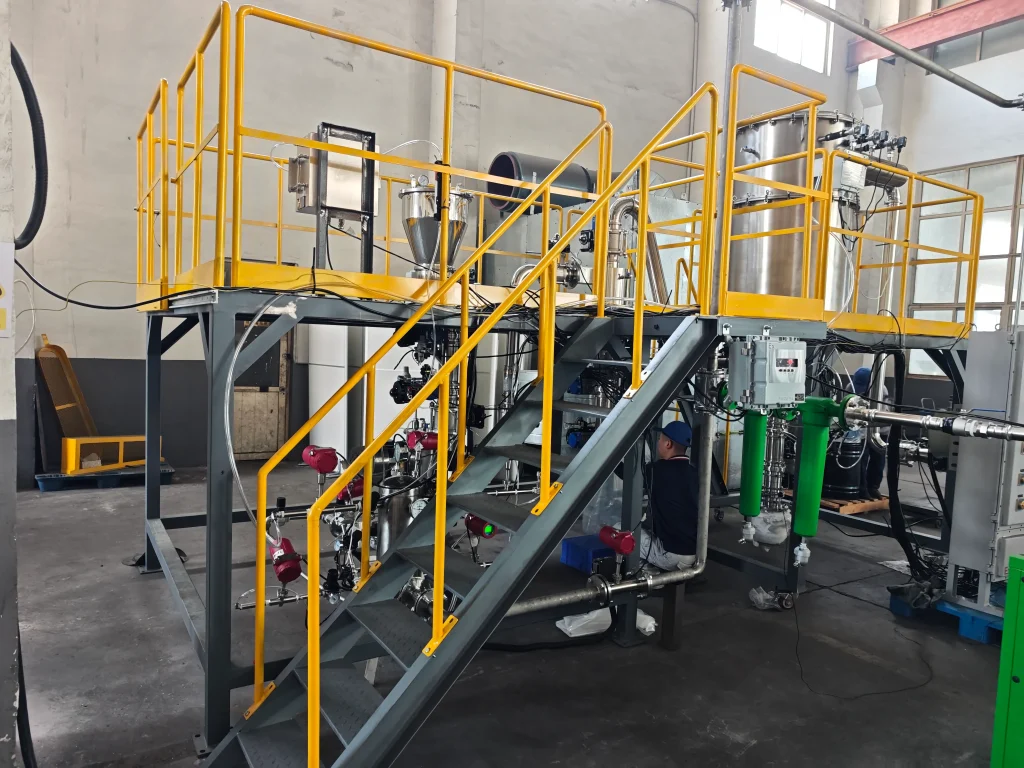
This is the section most buyers care about. A jet mill is not a plug-and-play device. It needs proper installation, alignment, and tuning to hit your target particle size.
Who Handles the Installation?
Epic Powder sends a team to your site. Typically this includes a mechanical engineer and an electrical engineer. They are responsible for:
1. Supervising the positioning and anchoring of the equipment
2. Guiding mechanical assembly and piping connections
3. Overseeing electrical wiring and control system setup
4. Running the commissioning sequence: dry run, no-load test, and load test
5. Training your operators, maintenance crew, and lab personnel
Your team handles the physical labor: lifting, bolting, running cables, and connecting utilities. Our engineers direct the work and make sure every step is done correctly. If you do not have enough staff available, we can discuss arranging additional manpower before the visit.
How Long Does Installation Take?
A realistic timeline for a single jet mill installation is 4 to 6 weeks from the day the equipment arrives at your site to full production. For multi-machine lines or systems with extensive auxiliary equipment, it can extend to 8 weeks.
Here is how those weeks typically break down:
| Phase | Typical Duration | What Happens |
| Unloading and positioning | 3 to 5 days | Offloading, removing packaging, moving equipment into position, checking foundation alignment |
| Mechanical assembly | 1 to 2 weeks | Mounting the mill body, connecting inlet and outlet piping, installing the classifier, fitting the feeding system |
| Electrical and controls | 1 week | Wiring the control cabinet, connecting sensors, programming the PLC, testing safety interlocks |
| Dry run and no-load test | 2 to 3 days | Running the system without material, checking vibration, bearing temperature, gas flow, and emergency stops |
| Load test with material | 3 to 5 days | Running your actual material, adjusting classifier speed and gas pressure to hit target particle size, running multiple batches for consistency |
| Operator training | 2 to 3 days | Hands-on training for production operators, maintenance team, and lab personnel |
Several factors can shorten or lengthen this timeline:
Site readiness. If the foundation, utilities, and feed material are all prepared before the machine arrives, you can cut the total by 5 to 7 days.
Number of machines. Two or three mills in parallel take longer, not because each machine is harder, but because piping and electrical layout become more complex.
Material characteristics. If your material is sticky, heat-sensitive, or highly abrasive, the commissioning phase may need extra tuning cycles.
Unexpected issues. A missing flange, a damaged sensor during transit, a power fluctuation. These things happen. We carry a set of common spare parts during installation trips to handle the small stuff on the spot.
One thing to keep in mind: Our engineers stay on site until your production line is running at target performance. We do not leave on a fixed calendar date. The timeline above is a reference. The real deadline is the day your mill produces material at the quality and throughput you specified.
Can You Come to Our Factory for Installation Training?
Yes. This is exactly what happens during the installation visit described above. Our mechanical and electrical engineers work alongside your team on your site. Training is not a separate classroom session. It is built into the installation process:
1. Your operators learn startup and shutdown procedures while the machine is being commissioned.
2. Your maintenance team learns disassembly and cleaning routines during the mechanical assembly phase.
3. Your lab personnel learn how to adjust parameters for different particle size targets during the load test phase.
If you want a dedicated training visit beyond the installation period, that can be arranged separately. Let your sales contact know and we will quote it based on the scope and duration.
Material Trial Runs
We offer material trial grinding so you can verify performance before committing to a purchase. However, this requires advance scheduling.
Trial runs are conducted at our facility using your material. You send us a sample (typically 20 to 50 kg), we run it through the appropriate mill configuration, and we send you the results: particle size distribution, throughput data, and a sample of the ground product. If you want to witness the trial in person, we can arrange that as well.
Things to know before requesting a trial:
1. Submit your request at least 2 weeks in advance. Our test lab runs on a schedule and walk-in requests are difficult to accommodate.
2. Provide a material safety data sheet (MSDS) for your material. This is mandatory for safety and handling.
3. Specify your target particle size (D50, D97, or D100) and throughput requirements.
4. If your material is sensitive to moisture, contamination, or temperature, tell us upfront so we can prepare the right setup.
Warranty and Spare Parts
Warranty Period
Our standard warranty is 18 months from the date of shipment or 12 months from the date of installation, whichever comes first. The warranty covers manufacturing defects in materials and workmanship. Wear parts, such as grinding nozzles, classifier blades, and filter elements, are excluded because their lifespan depends on operating conditions and material characteristics.
Spare Parts List
When you purchase a jet mill, we provide a recommended spare parts list covering the items most likely to need replacement during the first year of operation. This typically includes:
1. Grinding nozzles (a set)
2. Classifier rotor bearings
3. Filter bags or cartridges
4. Sealing gaskets and O-rings
5. Lubricants and grease
6. Sensor and solenoid valve spares
You can order these spares together with the main equipment to save on shipping costs. After the first year, we continue to supply spare parts on demand. Most wear parts are kept in stock, and non-stock items can be manufactured within 2 to 4 weeks.
Ongoing After-Sales Service
The relationship does not end after installation. We provide ongoing support throughout the life of the equipment. If you encounter a production issue, a quality deviation, or a mechanical problem, you can reach our engineering team by email, phone, or video call. In many cases we can diagnose the issue remotely by reviewing your operating data and photos.
For overseas customers, our response model works as follows:
Remote diagnosis. We respond within 24 hours and guide your team through troubleshooting steps.
Spare parts dispatch. If a part needs replacement, we ship it by express courier. Transit time depends on your location, typically 3 to 7 business days.
On-site service visit. If the issue cannot be resolved remotely, we dispatch an engineer. The lead time for a service visit depends on visa processing and flight availability, usually 2 to 4 weeks.
Documentation You Receive
Each jet mill delivery includes a full set of documentation in English. The standard package includes:
1. Operation manual with startup, shutdown, and emergency procedures
2. Maintenance manual with lubrication schedules, inspection checklists, and wear part replacement guides
3. Electrical schematic diagrams and PLC program documentation
4. Mechanical assembly drawings and spare parts catalog with part numbers
5. Certificate of conformity and factory test report
6. Packing list and shipping documents
If your application requires CE marking, ATEX certification, or other regulatory documents, these are included as applicable. Be sure to mention any documentation requirements during the quotation stage so they are included in the contract scope.
Frequently Asked Questions
Can I visit your factory to see the machine before delivery?
Yes. We encourage factory visits. You can see your machine during assembly, witness a factory acceptance test (FAT), and meet the engineering team that will handle your installation. Notify your sales contact at least 2 weeks in advance to arrange the visit.
What if my target particle size is not achieved during commissioning?
This is exactly why we do load testing during the installation visit. Our engineers adjust classifier speed, grinding pressure, and feed rate until the output meets your specification. If the target is not achievable with the current configuration, we discuss modifications or alternative solutions on site.
Do you offer installation supervision only, without the full commissioning package?
We strongly recommend the full package. Installation supervision alone means our engineer watches your team assemble the machine, but does not take responsibility for commissioning results. The full package ensures the machine is running to specification before we sign off.
How do I order spare parts after the warranty period?
Send us an email with the part numbers from your spare parts catalog. We confirm availability, provide a quotation, and ship upon order confirmation. For urgent needs, we can arrange express courier delivery.
What if we need to relocate the mill to a different building later?
We can provide a relocation service. This includes disassembly supervision, reinstallation at the new site, and recommissioning. Contact us for a quotation based on the scope of work.
Ready to Plan Your Jet Mill Project?
Contact our sales team to discuss your requirements, request a quotation, or schedule a material trial. We will walk you through the full delivery and installation process before you commit to anything.
Email: mineral@epic-powder.com

“Thanks for reading. I hope my article helps. Please leave a comment down below. You may also contact EPIC Powder online customer representative Zelda for any further inquiries.”
— Jason Wang, Engineer