
Photovoltaic silver paste is the core material for metallizing solar cell electrodes. Silver powder accounts for 70% to 90% of the paste by weight. This makes it the highest-cost component and the single most influential factor on cell efficiency. Spherical silver powder produced tends to agglomerate severely during drying. Once these agglomerates form, they are extremely difficult to break apart with conventional mechanical methods. The jet mill has become the key equipment for dispersing agglomerated spherical silver powder and controlling particle size distribution.
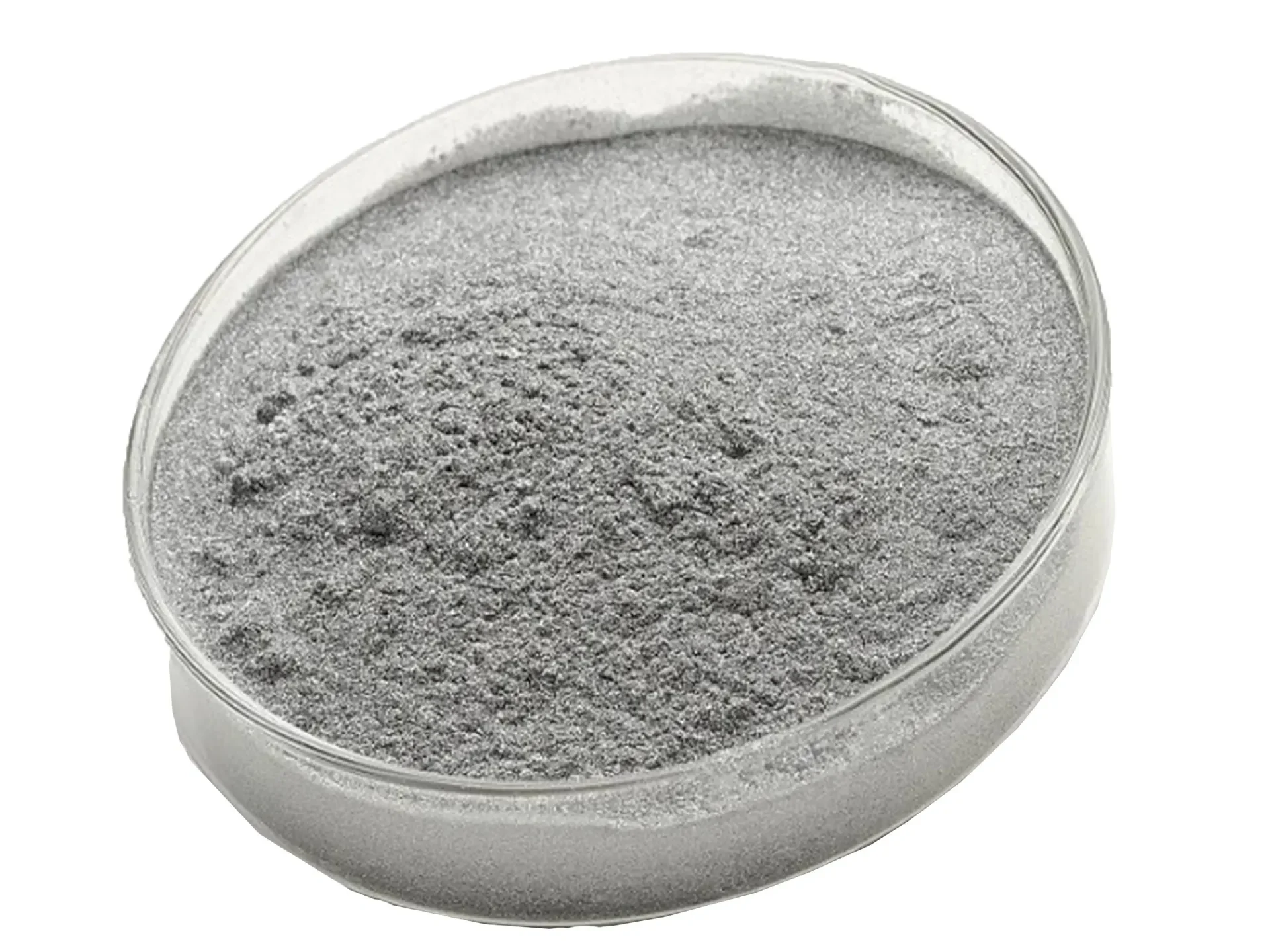
The Role of Spherical Silver Powder in PV Silver Paste
PV silver paste is divided into front-side and back-side paste, each with very different requirements for silver powder. Front-side paste is printed on the light-receiving surface of the cell to form fine finger lines and busbars. It is responsible for efficiently collecting and conducting photo-generated carriers, so the requirements for print precision, contact resistance, and electrical conductivity are extremely high. Front-side paste must use high-sphericity spherical silver powder, because spherical particles flow well, disperse uniformly, and resist settling during screen printing. It ensures fine grid line definition and a dense conductive network after sintering. Back-side paste is printed on the rear surface and handles large-area current collection and adhesion. Its conductivity requirements are relatively lower, and it typically uses flake silver powder as the main component, blended with a small amount of spherical silver powder to improve flowability.
In terms of market data, spherical silver powder now holds over 95% of the PV silver powder market share and is the mandatory choice for mass production of both PERC and TOPCon cells. Global silver consumption for PV reached 6,146 tons in 2024, accounting for 17% of total silver demand, and is projected to rise to 7,560 tons in 2025. Each gigawatt of PV installation consumes approximately 70 tons of silver. As global PV capacity continues to climb, demand for high-quality spherical silver powder grows in parallel.
Agglomeration: The Core Problem in Spherical Silver Powder Production
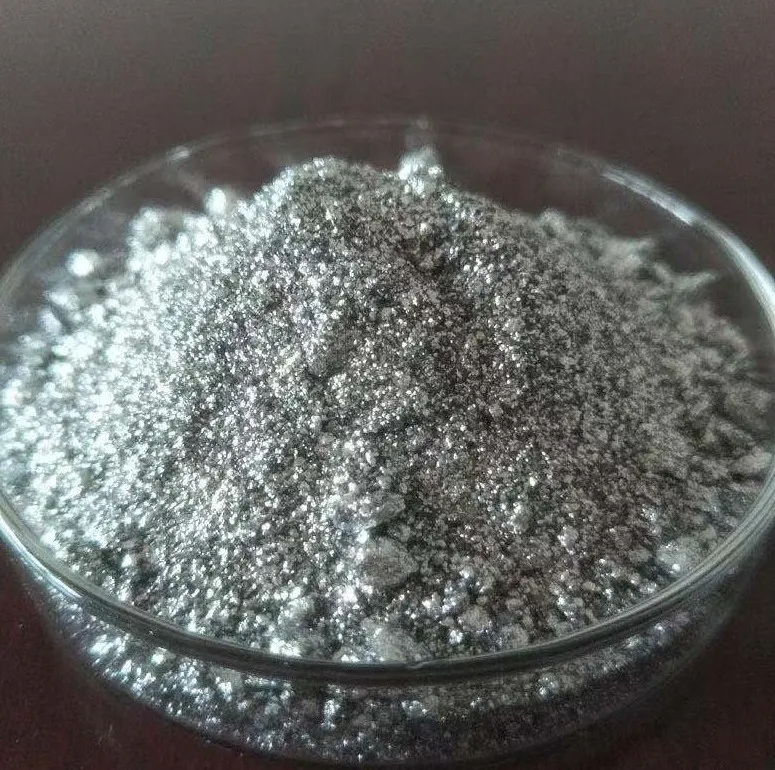
The mainstream method for producing spherical silver powder is chemical reduction, which controls particle size by adjusting pH, reductant drip rate, and dispersant dosage. This method is simple to operate, offers good controllability, and remains the primary process for crystalline silicon cell silver powder. However, the silver powder produced by chemical reduction typically has a particle size in the micron or even sub-micron range, with high specific surface area and high surface energy. During drying, the particles readily agglomerate. This agglomeration is not simple physical clustering but dense agglomerates formed through van der Waals forces and surface charge interactions. Once formed, these agglomerates are very difficult to fully disperse using ordinary mechanical stirring or ultrasonic methods.
If agglomerated silver powder is used directly to formulate silver paste, a series of problems arises. The particle size distribution widens, and large particles can block screen printing mesh openings, causing grid line breaks or burrs. The silver powder settles faster in the organic vehicle, reducing paste storage stability. During sintering, the particles inside agglomerates do not fuse adequately, leaving voids or defects in the conductive network, which raises contact resistance and ultimately lowers cell conversion efficiency. Therefore, silver powder must undergo effective dispersion before entering the paste formulation.
How Jet Milling Works and Its Technical Advantages
A jet mill uses high-pressure, high-velocity gas as its sole grinding force. Material particles are driven by the high-speed gas stream and undergo high-frequency particle-on-particle collisions, friction, and shear. This process breaks up agglomerates and achieves ultrafine size reduction. The built-in dynamic classifier wheel performs classification simultaneously. Coarse particles return for further grinding while fine particles pass through the classifier wheel and exit, achieving a narrow particle size distribution in a single step.
Jet milling offers three key advantages for spherical silver powder dispersion. In terms of purity, the entire process involves no grinding media, eliminating metal contamination at the source. This is critical for front-side silver powder, which requires ultra-high purity with strict control of lead, iron, and copper impurities. In terms of sphericity, jet milling achieves dispersion through particle self-collision. It causes far less damage to the spherical morphology than other mechanical grinding methods. The dispersed silver powder retains a high sphericity. In terms of particle size control, by adjusting nozzle pressure, classifier wheel speed, and feed rate. The D50 can be precisely controlled within the target range with a narrow distribution, meeting the strict requirements of PV silver paste.
European patent EP4516432A1 discloses a silver powder production method in which the disintegration step uses particle collision to simultaneously reduce surface irregularities on silver particles, achieving surface smoothing. Silver powder with smoothed surfaces flows better, has higher tap density, and shows better dispersion stability in organic vehicles. After jet mill processing, silver powder tap density can reach above 4.0 g/cm3, with premium products achieving 4.2 to 5.0 g/cm3. Higher tap density means more active conductive material per unit volume, resulting in denser sintered thick films and lower resistance.
Inert Gas Protection and Closed-Loop Processing
Silver powder colliding at high speed in air carries a risk of oxidation. Surface oxide layers significantly reduce the sintering activity and electrical performance of the powder. Epic Powder offers a closed-loop inert gas protection solution for precious metal powder processing. The entire jet mill system operates in a sealed state, using nitrogen or argon as the grinding gas medium, with oxygen content controlled to extremely low levels to effectively prevent silver surface oxidation. The closed-loop design also achieves zero dust emission, protecting the working environment and preventing loss of valuable metal material.
Under inert gas conditions, oxide layer formation on silver particle surfaces is suppressed, preserving sintering activity. This is especially important for N-type cells. TOPCon and HJT cells use passivated contact structures and low-temperature sintering processes, with sintering temperatures 200 to 300 degrees lower than conventional PERC. This places higher demands on the sintering activity of the silver powder. If an oxide layer is present on the silver surface, the powder cannot fully fuse during low-temperature sintering, and contact resistance rises noticeably. Inert gas-protected jet milling eliminates this risk at the source.
Equipment Selection: Core Parameters for Technical Personnel
When selecting equipment for silver powder dispersion, technical personnel should focus on several key dimensions. Nozzle pressure determines the collision kinetic energy of particles and directly affects agglomerate breakup. Silver powder dispersion typically requires a working pressure of 0.4 to 0.8 MPa. Classifier wheel speed controls the particle size cut point: higher speed produces finer cuts, and the required speed range should be calculated from the target D50 and D97. The grinding chamber material must be ceramic or lined with polyurethane or similar non-metallic materials to prevent iron, chromium, and other impurities from the chamber walls during collisions. Gas purification grade affects product purity: compressed air or inert gas must pass through precision filters with oil content controlled below 0.01 ppm and dust filtration down to 0.01 micrometers.
For closed-loop inert gas systems, the sealing performance of the gas recovery and circulation system must also be verified. Oxygen monitoring accuracy should reach ppm level, with continuous monitoring of chamber oxygen concentration during operation and automatic gas replenishment and purging if levels exceed the threshold. Gas consumption directly affects operating costs. Typical gas consumption for silver powder dispersion is around 30 to 50 Nm3 per ton of material. The equipment design should maximize circulation efficiency to reduce inert gas makeup volume.
Epic Powder Jet Mill Solution and Material Testing
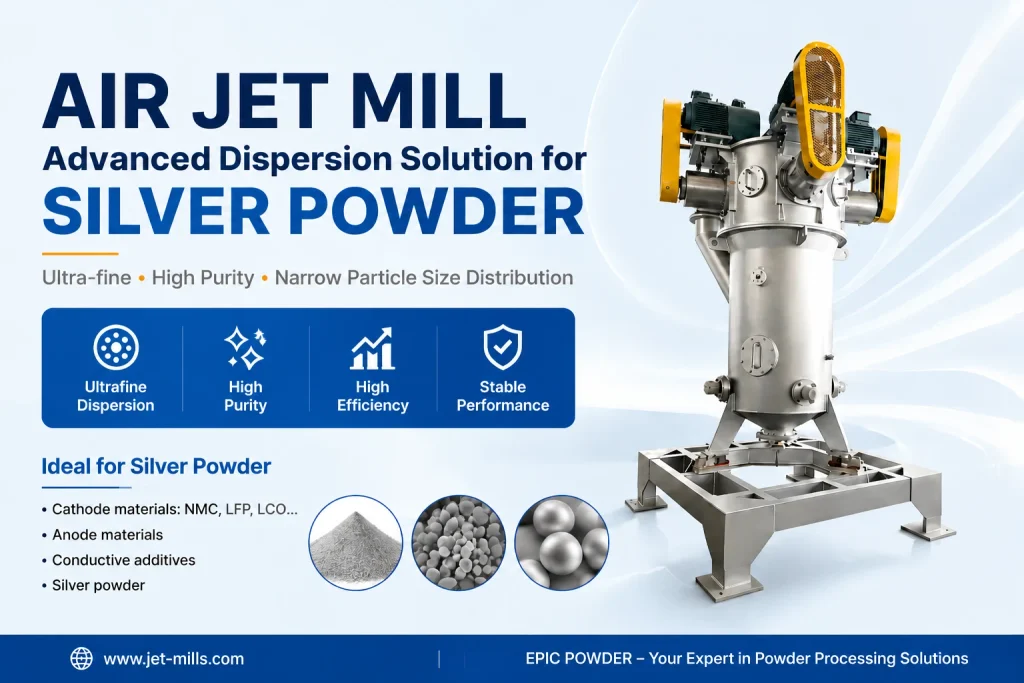
The Epic Powder Fluidized Bed Opposed Air Jet Mill is the suitable model for silver powder dispersion. The equipment offers a D50 controllable range of 1 to 25 micrometers and D97 down to 2 to 45 micrometers, with media-free low-temperature grinding, sealed dust-free operation, and narrow particle size distribution. It is suitable for heat-sensitive, contamination-prone, high-value materials. Multiple opposed nozzles create a high-concentration collision zone at the center of the fluidized bed, delivering high grinding efficiency with low energy consumption. The built-in high-efficiency classifier wheel provides precise particle size cuts with good reproducibility.
Epic Powder has mature experience in precious metal powder processing. We provide closed-loop inert gas processes capable of safe, oxidation-free processing of silver, platinum, and other precious metal powders. After equipment delivery, Epic Powder provides installation, commissioning, and operator training to ensure production line personnel can handle inert gas purging, particle size adjustment, and routine maintenance.
Technical Requirements for Silver Powder in PV Silver Paste

| Parameter | Requirement | Notes |
| D50 Particle Size | 1.0 to 3.0 micrometers | Front-side paste typically uses 1 to 3 micrometers |
| Particle Size Distribution | Narrow distribution | Ensures print precision and sintering conductivity |
| Sphericity | Greater than or equal to 0.9 | Good flowability and dispersibility |
| Tap Density | Above 4.0 g/cm3 | Premium products reach 4.2 to 5.0 g/cm3 |
| Specific Surface Area | 0.25 to 1.0 m2/g | Affects sintering activity and paste performance |
| Dispersibility | No significant settling within 72 hours | Stable in organic vehicle |
| Purity | Ultra-high purity | Strict control of Pb, Fe, Cu and other impurities |
Capacity and Cost Factors for Buyers
Equipment selection is not only about technical specifications but also about matching capacity and cost. Jet mill capacity depends on material characteristics and target particle size. For silver powder dispersion, capacity typically ranges from 5 to 50 kg per hour, depending on equipment size and classification precision. Buyers should calculate the required equipment capacity based on daily silver powder consumption of the paste production line, leaving a 20% to 30% margin for production fluctuations.
Operating costs consist mainly of gas energy consumption and inert gas usage. In a closed-loop system, the inert gas is recycled, with makeup volume typically accounting for 5% to 10% of total system gas, keeping nitrogen replenishment costs manageable. For maintenance, nozzles and classifier wheels are the primary wear parts. Ceramic nozzles have a service life of approximately 2,000 to 3,000 hours. Classifier wheel blade wear depends on material hardness; silver powder has a low Mohs hardness, so wear is relatively slow and maintenance intervals are longer.
Frequently Asked Questions

Does jet milling damage the sphericity of silver powder?
Jet milling achieves dispersion through inter-particle collision without the compression and friction of grinding media, so the damage to the spherical morphology is minimal. The sphericity of dispersed silver powder can be maintained above 0.9.
Will silver powder oxidize during jet mill processing?
With the closed-loop inert gas protection system using nitrogen or argon as the gas medium, system oxygen content is controlled to extremely low levels. The risk of silver surface oxidation is very low, and sintering activity is preserved.
What after-sales support is provided after equipment delivery?
Epic Powder provides installation, commissioning, operator training, and remote technical support. Production line personnel learn inert gas purging, particle size adjustment, and routine maintenance. Wear parts such as ceramic nozzles and classifier wheel blades are stocked for quick shipment.
For silver powder dispersion solutions, material testing, or equipment quotes, visit www.jet-mills.com to contact the Epic Powder technical team.

“Thanks for reading. I hope my article helps. Please leave a comment down below. You may also contact EPIC Powder online customer representative Zelda for any further inquiries.”
— Jason Wang, Engineer