
В порошковой промышленности струйные и шаровые мельницы являются двумя наиболее полезными типами оборудования для сверхтонкого измельчения. При выборе оборудования многие клиенты задают один и тот же вопрос: “В чем именно разница между…?» струйная мельница А шаровая мельница? Какая из них лучше подходит для моего материала?”
Проще говоря, струйные мельницы имеют более высокие производственные затраты, чем шаровые мельницы, и подходят для измельчения материалов с высокой добавленной стоимостью. Струйные мельницы измельчают материалы с помощью газа под высоким давлением; поскольку процесс измельчения не предполагает контакта с металлическими измельчающими элементами, вероятность попадания примесей снижается, что делает их более подходящими для отраслей с жесткими требованиями к чистоте. Однако это лишь самое поверхностное различие — для принятия правильного решения о выборе необходимо также понимать различия по нескольким параметрам, включая принципы работы, размер частиц, энергопотребление и повышение температуры. В этой статье будет представлено систематическое сравнение по семи основным параметрам и предложены четкие рекомендации по выбору подходящего оборудования.
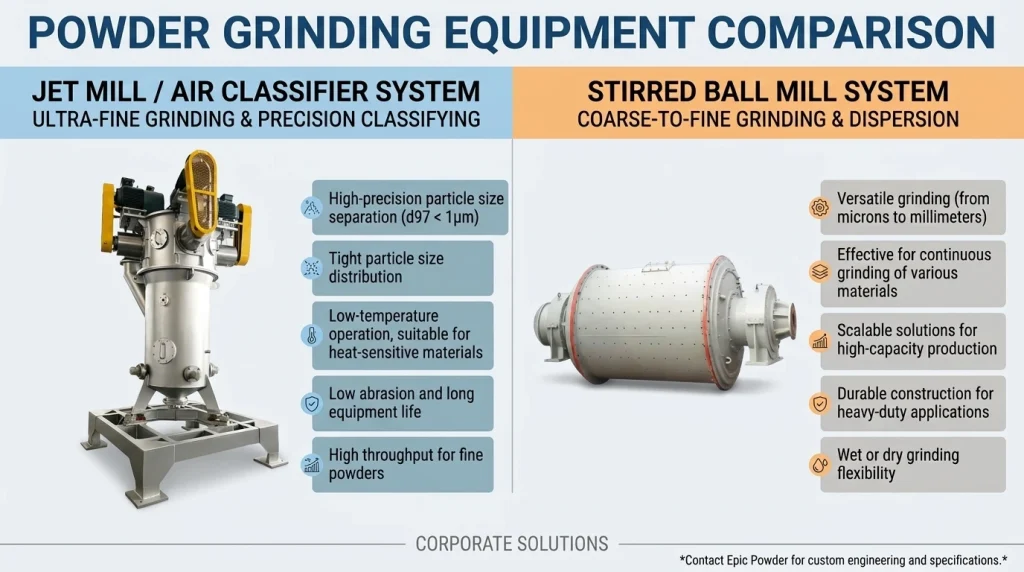
I. Принцип работы
Принцип работы струйной мельницы
Струйная мельница использует газ высокого давления (сжатый воздух, азот или перегретый пар), ускоренный до сверхзвуковой скорости через специальное сопло для создания высокоскоростного газового потока. Частицы материала ускоряются в газовом потоке, сталкиваются, трутся друг о друга и подвергаются сдвиговым нагрузкам, в результате чего происходит измельчение. На протяжении всего процесса материал сталкивается только с газовым потоком и сам с собой; он не контактирует с металлическими измельчающими элементами.
Струйная мельница оснащена высокоскоростным классификационным колесом, позволяющим одновременно осуществлять измельчение и классификацию. Крупные частицы отбрасываются назад для дальнейшего измельчения, а мелкий порошок выгружается через центральное выходное отверстие, что обеспечивает одноэтапное производство порошка.
Принцип работы шаровой мельницы
Шаровая мельница работает за счет вращения цилиндра, поднимающего внутренние измельчающие элементы (стальные шарики, шарики из оксида алюминия, шарики из диоксида циркония и т. д.) на определенную высоту, после чего они сбрасываются, тем самым ударяя, измельчая и сжимая материал. Измельчение материала происходит за счет многократных ударов измельчающих элементов.
Для контроля конечного размера частиц в шаровых мельницах обычно требуется внешний классификатор, поскольку измельчение и классификация — это два отдельных этапа.
Ключевое различие: в пневматических мельницах используется измельчение частиц друг о друга, при котором материал измельчается. В шаровых мельницах используется измельчение с помощью мелющих тел (шариков), при котором мелющие тела (шарики) трутся о материал. В первом случае контакт с мелющими телами отсутствует, тогда как во втором происходит износ мелющих тел.
II. Сравнение 7 ключевых параметров
| Размер сравнения | Реактивная мельница | Шаровая мельница |
|---|---|---|
| Источник шлифовальной силы | Сверхзвуковая струя воздуха + столкновение частиц | Механическое воздействие абразивных материалов (стальных/керамических шариков) |
| Тонкость помола продукта (D97) | 2–45 мкм, достижимо на субмикронном уровне | 5–74 мкм (сухое измельчение); при увеличении времени измельчения можно получить более мелкий размер частиц. |
| Распределение размера частиц | Очень узкие, плотно сгруппированные | Относительно широкий; для сужения требуется классификатор. |
| Повышение температуры во время измельчения | Ниже температуры окружающей среды (из-за охлаждения вследствие расширения газа) | Значительное повышение температуры; требуется водяное или воздушное охлаждение. |
| Риск загрязнения металлами | Очень низкое качество (без абразивных материалов; керамические футеровки по желанию) | Низкий или умеренный уровень износа (продукты износа от шлифовальных тел) |
| Потребление энергии | Относительно высокий (требуется большой объем газа под высоким давлением) | Относительно низкая (вращение корпуса с помощью электродвигателя) |
| Пропускная способность | 5 – 12 000 кг/ч | 100–50 000 кг/ч (значительное преимущество для крупномасштабного производства) |
III. Руководство по выбору
| Jet Mill – Рекомендуется в следующих случаях: | Шаровая мельница – рекомендуется в следующих случаях: | |
|---|---|---|
| Требования к тонкости помола | Необходим сверхтонкий порошок: целевой размер частиц D97 ≤ 10 мкм, например, материалы для катодов батарей, фармацевтические порошки, современная керамика. | Допустима средняя тонкость помола: целевой показатель D97 составляет от 20 до 74 мкм. |
| Требование к чистоте | Требуется высокая чистота: нулевая терпимость к загрязнению железом/металлами, например, материалами литий-ионных батарей, порошками электронного качества, ингаляционными препаратами. | Допустимо незначительное загрязнение: в промышленных условиях, где чистота не является критичной. |
| Свойства материала | Термочувствительные материалы: вещества с низкой температурой плавления или склонные к окислению, например, пестициды, фармацевтические препараты, порошки смол. | Материалы средней твердости: например, известняк, кварц, цементный клинкер, руды. |
| Масштабы производства | Небольшие и средние партии, продукция высокой стоимости | Крупномасштабное производство: высокие требования к производительности, например, строительные материалы, горнодобывающая промышленность, производство химикатов в больших объемах. |
| Распределение частиц | Требуется узкое распределение частиц по размерам: высокая однородность размера частиц. | Более широкое распространение допустимо |
| Соображения стоимости | Высокая ценность продукта оправдывает более высокие затраты на обработку. | Проекты, чувствительные к затратам: приоритет отдается контролю над инвестициями в оборудование и эксплуатационными расходами. |
IV. Типичные отраслевые применения
| Промышленность / Материалы | Рекомендуемое оборудование | Причина |
|---|---|---|
| Катодные материалы для литий-ионных батарей | Реактивная мельница | Отсутствие примесей железа, сверхмелкий размер частиц, узкое распределение |
| Фармацевтические препараты / АФИ (активные фармацевтические ингредиенты) | Реактивная мельница | Соответствие стандартам GMP, низкотемпературное измельчение, отсутствие загрязнения среды. |
| Передовая керамика / Электронные порошки | Реактивная мельница | Высокая чистота, субмикронный размер частиц |
| Пигменты / Красители | Реактивная мельница | Узкое распределение частиц по размерам, стабильная однородность цвета. |
| Цемент / Строительные материалы | Шаровая мельница | Крупномасштабное производство, чувствительность к затратам |
| Переработка руды/минералов | Шаровая мельница | Высокая производительность, умеренная тонкость помола |
| Кварц / Полевой шпат | Шаровая мельница + классификатор | Контролируемая стоимость, регулируемый размер частиц. |
V. Сравнение затрат
Распространенная ошибка многих покупателей заключается в том, что при выборе оборудования они сравнивают только цену покупки. На самом деле решающим фактором является общая стоимость владения:
| Статья затрат | Реактивная мельница | Шаровая мельница |
|---|---|---|
| Инвестиции в оборудование | Более высокая комплектация (включает систему воздушного компрессора) | Ниже |
| Потребление энергии | Более высокий (расход газа под высоким давлением) | Более низкий (потребляемая мощность двигателя) |
| Замена мелющих элементов | Нет (без медиаконтента) | Периодическая замена стальных/керамических шариков. |
| Техническое обслуживание облицовки | Керамические футеровки имеют длительный срок службы и требуют редкой замены. | Вкладыши изнашиваются относительно быстро, требуется частое техническое обслуживание. |
| Потери продукта / Выход продукции | Низкое содержание (высокая чистота, минимальное количество брака) | Возможная отбраковка партии из-за загрязнения. |
Рекомендация по выбору:
Если ваш продукт имеет высокую добавленную стоимость и строгие требования к чистоте, более высокая стоимость оборудования для струйной мельницы будет компенсирована меньшими потерями продукта и более высокой премией за качество. И наоборот, если ваш продукт имеет низкую удельную стоимость и умеренные требования к чистоте, преимущество шаровой мельницы в плане стоимости становится более очевидным.
VI. Контрольный список для выбора оборудования
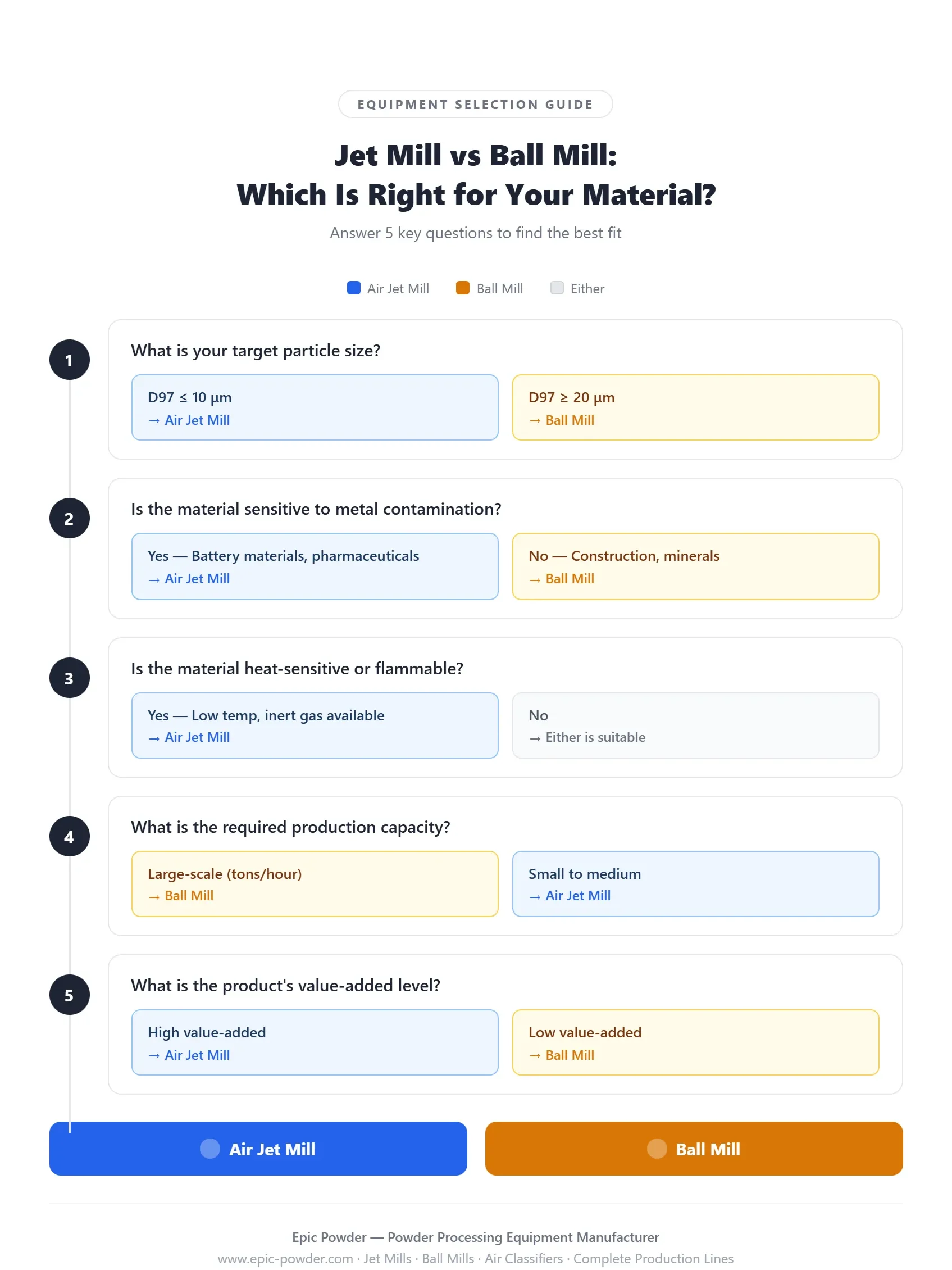
Все еще не знаете, какой выбрать? Эпический порошок Мы предлагаем профессиональные услуги по испытанию материалов, проводим испытания на измельчение с использованием ваших реальных материалов и используем полученные данные для принятия вами обоснованного решения. Мы производим как пневматические мельницы (серии MQP Spiral / MQW Fluidized Bed), так и шаровые мельницы, и предложим наиболее подходящее решение без предвзятости.
Свяжитесь с нами для бесплатной пробной версии →
Заключение
И струйные, и шаровые мельницы имеют свои преимущества, но ни одна из них не является принципиально лучше другой. Ключевым моментом является определение того, какая из них больше подходит для вашего конкретного применения.
Если вам требуется сверхтонкое измельчение (D97 ≤ 10 мкм), высокая чистота и низкотемпературная обработка, выбирайте струйную мельницу, несмотря на более высокое энергопотребление и первоначальные инвестиции. Это оптимальный выбор для обработки высокоценных материалов, таких как катоды батарей, фармацевтические препараты и современная керамика. Если же приоритетом является крупномасштабное производство, низкие эксплуатационные расходы и средняя тонкость помола (D97 20–74 мкм), выбирайте шаровую мельницу. Это универсальный инструмент для горнодобывающей промышленности, производства строительных материалов и химикатов.
В итоге: начните с определения целевого размера частиц, требований к чистоте, необходимой производительности и бюджета, а затем сопоставьте эти параметры с преимуществами и недостатками каждой технологии. Не уверены, какая из них вам подходит? Самый безопасный подход — провести пробное измельчение вашего реального материала и позволить результатам помочь вам принять решение. Данные всегда лучше догадок.
Эпический порошок
Эпический порошок, Более 20 лет опыта работы в индустрии ультратонких порошков. Активно содействуем развитию ультратонких порошков, уделяя особое внимание процессам дробления, измельчения, классификации и модификации ультратонких порошков. Связаться с нами Бесплатная консультация и индивидуальные решения!

Спасибо за прочтение. Надеюсь, моя статья вам поможет. Пожалуйста, оставьте комментарий ниже. Вы также можете свяжитесь с EPIC Представитель по работе с клиентами Powder Online Зельда для любых дальнейших запросов».
— Джейсон Ван, Инженер