
Toz işleme endüstrisinde, jet değirmenleri ve bilyalı değirmenler, ultra ince öğütme ekipmanlarının en kullanışlı iki türüdür. Ekipman seçimi yaparken birçok müşteri aynı soruyu sorar: "Jet değirmenleri ile bilyalı değirmenler arasındaki fark tam olarak nedir?" jet değirmeni Peki ya bilyalı değirmen? Malzemem için hangisi daha iyi?”
Basitçe söylemek gerekirse, hava jetli değirmenlerin üretim maliyetleri bilyalı değirmenlere göre daha yüksektir ve yüksek katma değerli malzemelerin öğütülmesi için uygundur. Jetli değirmenler, yüksek basınçlı gaz kullanarak malzemeleri öğütür; öğütme işlemi metal öğütme ortamıyla temas içermediğinden, safsızlıkların oluşma olasılığı daha düşüktür, bu da onları katı saflık gereksinimleri olan endüstriler için daha uygun hale getirir. Bununla birlikte, bu sadece en yüzeysel farktır; doğru seçim kararını vermek için, çalışma prensipleri, partikül boyutu, enerji tüketimi ve sıcaklık artışı dahil olmak üzere birçok boyuttaki farklılıklarını da anlamanız gerekir. Bu makale, yedi temel boyutta sistematik bir karşılaştırma sunacak ve doğru ekipmanı seçmek için net önerilerde bulunacaktır.
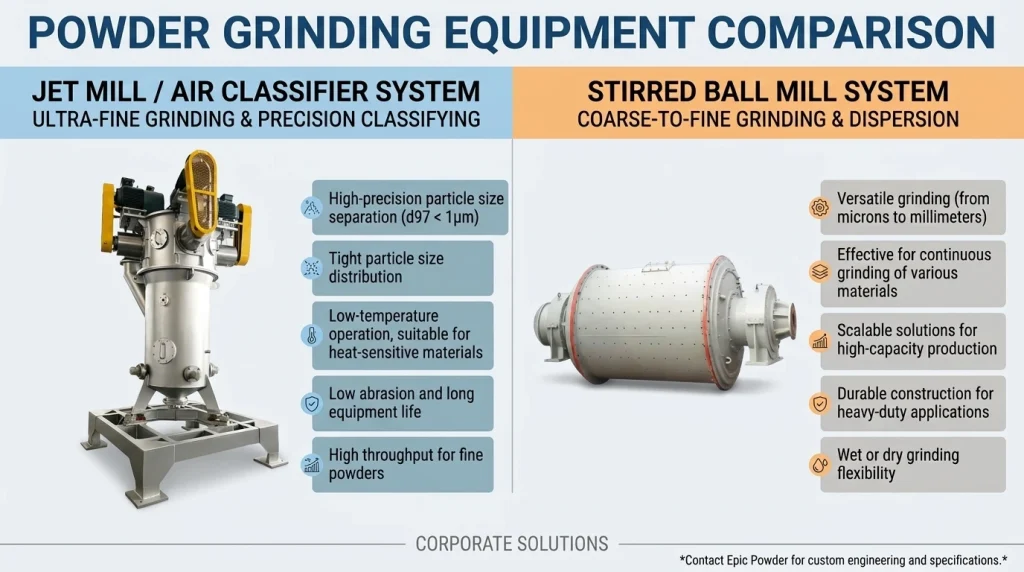
I. Çalışma Prensibi
Jet Değirmen Çalışma Prensibi
Jet değirmeni, yüksek basınçlı gazı (sıkıştırılmış hava, azot veya aşırı ısıtılmış buhar) özel bir nozuldan süpersonik hızlara ivmelendirerek yüksek hızlı bir gaz akış alanı oluşturur. Malzeme parçacıkları gaz akışı içinde ivmelenir, çarpışır, birbirine sürtünür ve kesme kuvvetlerine maruz kalır, böylece toz haline getirilir. İşlem boyunca malzeme sadece gaz akışı ve kendi kendine çarpışır; herhangi bir metal öğütme ortamıyla temas etmez.
Jet değirmeni, öğütme ve sınıflandırmanın eş zamanlı olarak gerçekleşmesini sağlayan yüksek hızlı bir sınıflandırıcı çark içerir. Kaba parçacıklar daha fazla öğütme için geri fırlatılırken, ince toz merkezi çıkıştan dışarı atılır ve böylece tek aşamalı toz üretimi sağlanır.
Bilyalı Değirmenin Çalışma Prensibi
Bilyalı değirmen, içindeki öğütme ortamını (çelik bilyeler, alümina bilyeler, zirkonya bilyeler vb.) belirli bir yüksekliğe kaldırmak için silindiri döndürerek çalışır; daha sonra bu bilyeler serbest bırakılır ve böylece malzeme çarpılarak, öğütülerek ve sıkıştırılarak parçalanır. Malzeme, öğütme ortamından gelen tekrarlanan çarpmalar yoluyla toz haline getirilir.
Bilyalı değirmenler, öğütme ve sınıflandırma iki ayrı adım olduğundan, nihai parçacık boyutunu kontrol etmek için genellikle harici bir sınıflandırıcıya ihtiyaç duyar.
Temel Fark: Hava jetli değirmenler, malzemenin kendi kendine öğütüldüğü, parçacık-parçacık öğütme prensibine dayanır. Bilyalı değirmenler ise öğütme ortamının (bilyelerin) malzemeye sürtündüğü, ortam öğütme prensibine dayanır. Birincisinde öğütme ortamıyla temas olmazken, ikincisinde öğütme ortamında aşınma meydana gelir.
II. 7 Temel Parametrenin Karşılaştırılması
| Karşılaştırma Boyutu | Jet Değirmeni | Bilyalı Değirmen |
|---|---|---|
| Öğütme Kuvvetinin Kaynağı | Süpersonik hava jeti + parçacık-parçacık çarpışması | Öğütme ortamından (çelik/seramik bilyeler) kaynaklanan mekanik darbe |
| Ürün İnceliği (D97) | 2 – 45 μm, mikron altı seviyeye kadar elde edilebilir. | 5 – 74 μm (kuru öğütme); daha uzun öğütme süresiyle daha ince taneciklere ulaşılabilir. |
| Parçacık Boyut Dağılımı | Çok dar, sıkıca kümelenmiş | Nispeten geniş; daraltmak için sınıflandırıcı gereklidir. |
| Öğütme Sırasında Sıcaklık Artışı | Ortam sıcaklığının altında (gaz genleşmesiyle soğuma nedeniyle) | Önemli artış; su veya hava soğutması gerektirir. |
| Metal Kirlenmesi Riski | Çok düşük (öğütme ortamı yok; seramik astarlar isteğe bağlı) | Düşük ila orta (taşlama ortamından kaynaklanan aşınma artıkları) |
| Enerji Tüketimi | Nispeten yüksek (yüksek hacimli, yüksek basınçlı gaz gerektirir) | Nispeten düşük (motor tahrikli kabuk dönüşü) |
| Verim Kapasitesi | 5 – 12.000 kg/saat | 100 – 50.000 kg/saat (büyük ölçekli üretim için önemli avantaj) |
III. Seçim Kılavuzu
| Jet Mill – Ne Zaman Önerilir: | Bilyalı Değirmen – Ne Zaman Önerilir: | |
|---|---|---|
| İncelik Gereksinimi | Ultra ince toz gereklidir: hedef D97 ≤ 10 μm, örneğin pil katot malzemeleri, farmasötik tozlar, gelişmiş seramikler. | Orta incelik kabul edilebilir: hedef D97 değeri 20 – 74 μm arasındadır. |
| Saflık Gereksinimi | Yüksek saflık gereklidir: demir/metal kirliliğine sıfır tolerans, örneğin lityum iyon pil malzemeleri, elektronik sınıfı tozlar, inhalasyon formülasyonları. | Az miktarda kirlenme kabul edilebilir: saflığın son derece kritik olmadığı endüstriyel uygulamalar. |
| Malzeme özellikleri | Isıya duyarlı malzemeler: düşük erime noktasına sahip veya oksidasyona yatkın maddeler, örneğin böcek ilaçları, ilaçlar, reçine tozları. | Orta sertlikteki malzemeler: örneğin, kireç taşı, kuvars, çimento klinkeri, cevherler |
| Üretim Ölçeği | Küçük ve orta ölçekli partiler halinde, yüksek değerli ürünler | Büyük ölçekli üretim: yüksek verim gereksinimleri, örneğin inşaat malzemeleri, madencilik, toplu kimyasallar. |
| Parçacık Dağılımı | Dar parçacık boyutu dağılımı gereklidir: son derece homojen parçacık boyutu. | Daha geniş dağıtım kabul edilebilir. |
| Maliyet Değerlendirmesi | Yüksek ürün değeri, daha yüksek işleme maliyetini haklı çıkarır. | Maliyet hassasiyeti yüksek projeler: ekipman yatırımı ve işletme maliyetlerinin kontrolüne öncelik verilmelidir. |
IV. Tipik Endüstri Uygulamaları
| Sanayi / Malzeme | Önerilen Ekipmanlar | Sebep |
|---|---|---|
| Lityum İyon Pil Katot Malzemeleri | Jet Değirmeni | Sıfır demir kirliliği, ultra ince parçacık boyutu, dar dağılım |
| İlaçlar / API (Aktif Farmasötik Bileşenler) | Jet Değirmeni | GMP uyumluluğu, düşük sıcaklıkta öğütme, ortam kontaminasyonu yok. |
| Gelişmiş Seramikler / Elektronik Tozlar | Jet Değirmeni | Yüksek saflıkta, mikron altı parçacık boyutu |
| Pigmentler / Boyalar | Jet Değirmeni | Dar parçacık boyutu dağılımı, istikrarlı renk tutarlılığı |
| Çimento / İnşaat Malzemeleri | Bilyalı Değirmen | Büyük ölçekli üretim, maliyete duyarlı |
| Cevher / Mineral İşleme | Bilyalı Değirmen | Yüksek verim, orta incelik |
| Kuvars / Feldspat | Bilyalı Değirmen + Sınıflandırıcı | Kontrol edilebilir maliyet, ayarlanabilir parçacık boyutu |
V. Maliyet Karşılaştırması
Birçok müşterinin yaptığı yaygın bir hata, ekipman seçerken yalnızca satın alma fiyatını karşılaştırmaktır. Asıl karar verici unsur, toplam sahip olma maliyetidir:
| Maliyet Kalemi | Jet Değirmeni | Bilyalı Değirmen |
|---|---|---|
| Ekipman Yatırımı | Daha yüksek (hava kompresörü sistemi dahil) | Daha düşük |
| Enerji Tüketimi | Daha yüksek (yüksek basınçlı gaz tüketimi) | Daha düşük (motor güç tüketimi) |
| Öğütme Ortamı Değişimi | Yok (medya içermeyen) | Çelik/seramik bilyelerin periyodik olarak değiştirilmesi |
| Astar Bakımı | Seramik kaplamalar uzun ömürlüdür ve nadiren değiştirilmeleri gerekir. | İç astarlar nispeten hızlı yıpranır, sık bakım gerektirir. |
| Ürün Kaybı / Verim | Düşük (yüksek saflık, minimum fire) | Kontaminasyon nedeniyle potansiyel parti reddi |
Seçim Önerisi:
Ürününüz yüksek katma değere ve sıkı saflık gereksinimlerine sahipse, jet değirmeninin daha yüksek ekipman maliyeti, daha düşük ürün kaybı ve daha yüksek kalite primi ile dengelenecektir. Tersine, ürününüzün birim değeri düşük ve saflık gereksinimleri orta düzeydeyse, bilyalı değirmenin maliyet avantajı daha belirgin hale gelir.
VI. Ekipman Seçim Kontrol Listesi
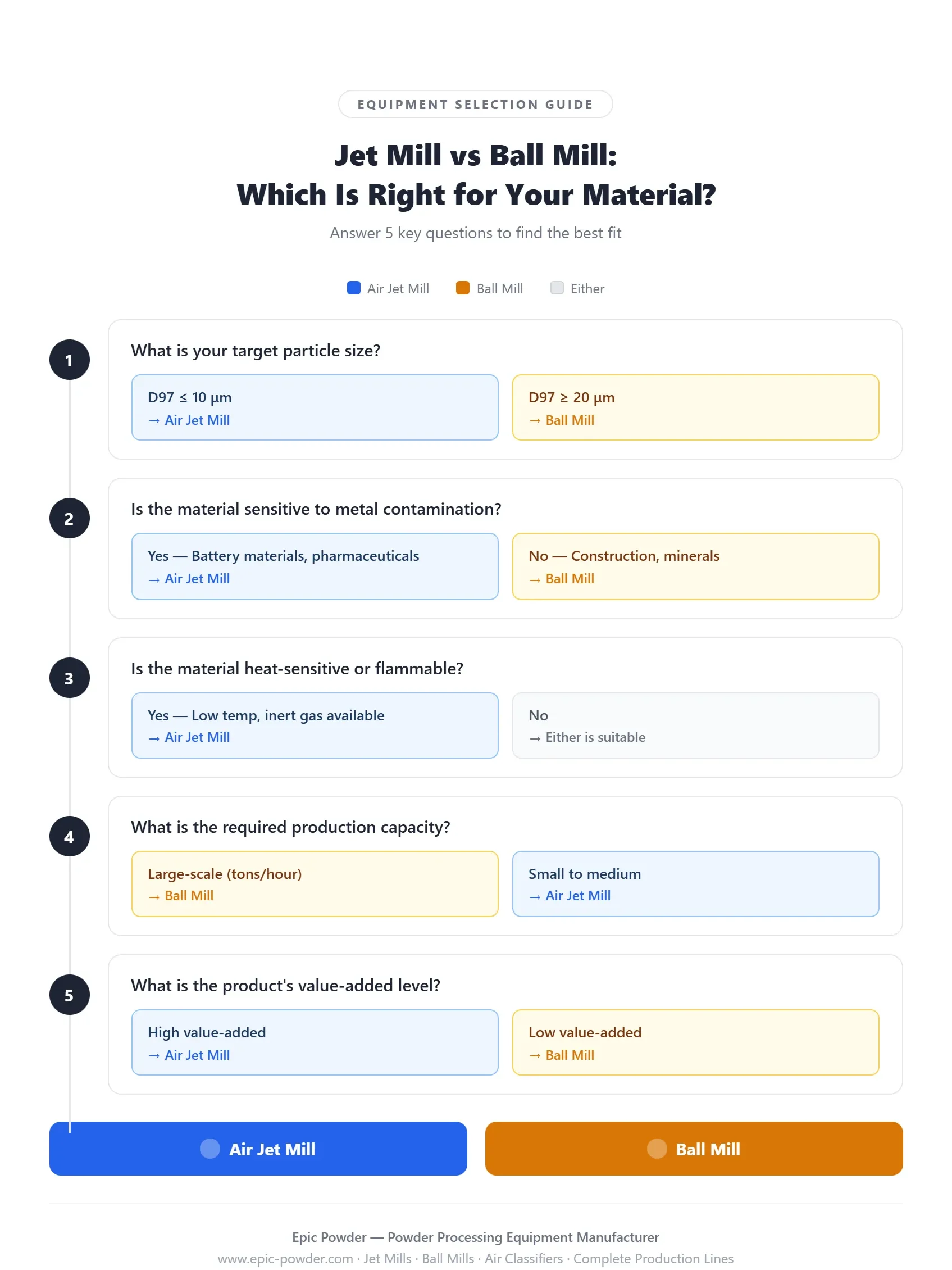
Hâlâ hangisini seçeceğinize karar veremediniz mi? Epik Toz Profesyonel malzeme test hizmetleri sunuyoruz; gerçek malzemelerinizle öğütme testleri gerçekleştiriyor ve elde edilen verileri kullanarak bilinçli bir karar vermenize yardımcı oluyoruz. Hem hava jetli değirmenler (MQP Spiral Serisi / MQW Akışkan Yatak Serisi) hem de bilyalı değirmenler üretiyoruz ve tarafsız bir şekilde en uygun çözümü sunuyoruz.
Ücretsiz deneme için bizimle iletişime geçin →
Çözüm
Hem jet değirmenlerinin hem de bilyalı değirmenlerin kendine özgü avantajları vardır, ancak biri diğerinden daha iyi değildir. Önemli olan, hangi yöntemin sizin özel uygulamanız için daha uygun olduğunu bulmaktır.
Ultra ince öğütme (D97 ≤ 10 μm), yüksek saflık ve düşük sıcaklıkta işleme ihtiyacınız varsa, daha yüksek enerji tüketimi ve başlangıç yatırımı gerektirse bile jet değirmeni tercih edin. Pil katotları, ilaçlar ve gelişmiş seramikler gibi yüksek değerli malzemeler için en ideal seçimdir. Önceliğiniz büyük ölçekli üretim, düşük işletme maliyetleri ve orta incelik (D97 20–74 μm) ise bilyalı değirmen tercih edin. Madencilik, inşaat malzemeleri ve toplu kimyasallar için çok yönlü bir iş makinesidir.
Özetle: Öncelikle hedeflediğiniz partikül boyutunu, saflık gereksinimlerini, verim ihtiyaçlarınızı ve bütçenizi belirleyin; ardından bunları her teknolojinin avantaj ve dezavantajlarıyla karşılaştırın. Hangisinin sizin için doğru olduğundan emin değil misiniz? En güvenli yaklaşım, gerçek malzemenizle bir test öğütme işlemi gerçekleştirmek ve sonuçların kararınızı yönlendirmesine izin vermektir. Veriler her zaman tahminlerden daha iyidir.
Epik Toz
Epik Toz, 20 yılı aşkın süredir ultra ince toz sektöründe deneyime sahibiz. Ultra ince tozun kırma, öğütme, sınıflandırma ve modifikasyon süreçlerine odaklanarak, ultra ince tozun gelecekteki gelişimini aktif olarak destekliyoruz. Bize Ulaşın Ücretsiz danışmanlık ve size özel çözümler için!

"Okuduğunuz için teşekkürler. Umarım makalem yardımcı olur. Lütfen aşağıya yorum bırakın. Ayrıca şunları da yapabilirsiniz: EPIC ile iletişime geçin Toz çevrimiçi müşteri temsilcisi Zelda Daha fazla bilgi için bize ulaşın.”
— Jason Wang, Mühendis