
A jet molen carries almost no rotating grinding parts, because the gas stream does the work. The nozzles are the exception that matters. They accelerate gas to hundreds of meters per second, and they see abrasive powder continuously at that speed. As the bore enlarges, jet velocity falls, and the mill answers with a coarser D97 and a higher gas bill at the same setting. Nozzle wear is the quiet drift behind many unexplained D97 shifts, so it belongs in every operating log. This guide covers the wear mechanism, realistic life ranges, and the warning signs worth logging. It closes with a replacement routine that protects both quality and energy cost.
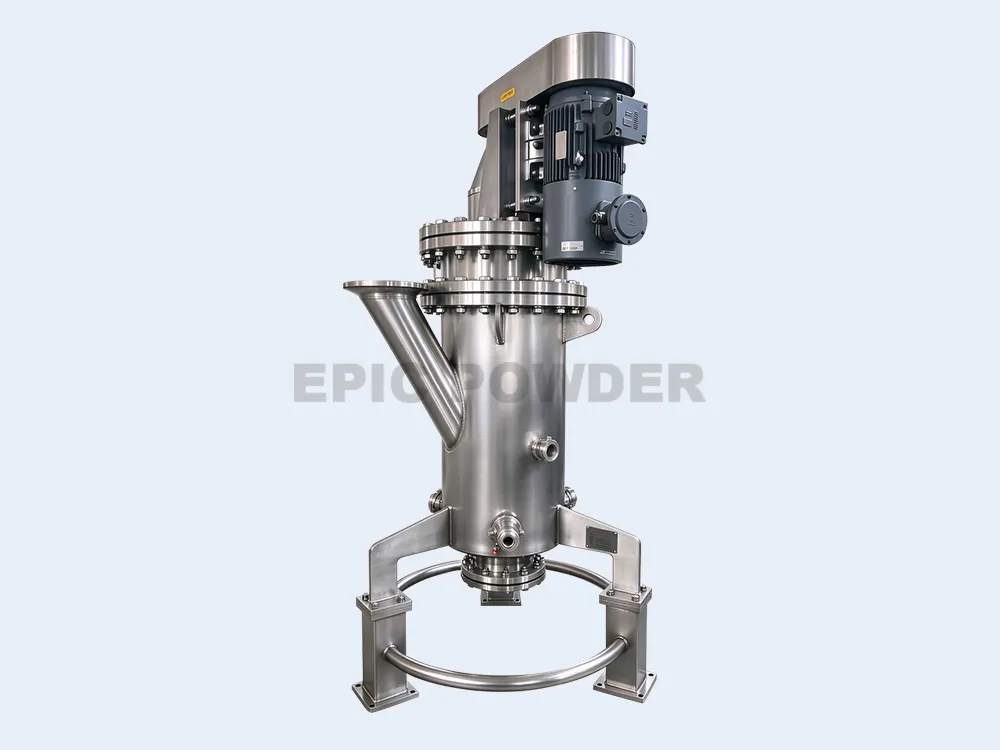
What Wears the Nozzle
The jet leaves the nozzle near sonic velocity and entrains feed particles within millimeters of the exit. Those particles strike the bore walls and the exit edge at full speed. Hard angular grains then cut the surface the way a sandblast hose cuts steel. Wear therefore scales with three variables together: particle hardness, feed rate, and jet velocity. Silicon carbide, quartz, and alumina feed stocks wear nozzles fastest, while soft organics and pharmaceutical actives barely touch them over a campaign. Feed rate compounds the effect, since a mill pushed hard recirculates more grains through the same bore every hour. The buildup patterns described in the grinding chamber buildup guide share this root cause. Both problems follow from the same particle-laden stream.
How Long a Nozzle Lasts
Service life spans a wide band, because the abrasive load sets it. The maintenance table in the complete jet mill guide lists a typical range of 3 to 12 months. The ends of that band match the extremes of the feed spectrum. Soft, low-abrasion materials occupy the long end, and sharp hard minerals consume the short end. Material choice stretches the band, because tungsten carbide and ceramic bore inserts resist cutting far longer than hardened steel under the same feed. Two honest caveats apply. A table range is a planning number, since a silicon carbide line can destroy a steel nozzle faster than any table predicts. A clean pharmaceutical line can outlast it by years. Treat the published range as a starting interval, then replace it with your own logged hours per material.
Warning Signs Worth Logging
A worn nozzle announces itself through process data before an operator sees anything. The signs overlap, so the pattern matters more than any single reading. The table below lists the signals and what each one means in practice.
| Signal | What it means | What to check |
|---|---|---|
| D97 creeps coarser at fixed settings | Jet velocity has dropped with the widening bore | Compare against a logged baseline, then inspect bores |
| Gas consumption rises per ton | The mill needs more gas to hold the same cut | Check compressor logs against the wear record |
| Pressure drop at the mill | The bore no longer presents designed resistance | Measure bore diameter with a pin gauge |
| Distribution widens | Uneven wear shifts the jets in different directions | Run a PSD report and compare width to baseline |
| Throughput falls at the same D97 | Weaker jets recycle more material per pass | Log hourly output, and rule out feed variation |
De particle size adjustment guide explains how wheel speed normally controls D97. That guide doubles as the reference for separating a control issue from a wear issue. If the size responds to small wheel changes as usual, the wheel is healthy and the nozzles deserve a look.
Nozzle Materials and What They Change
Bore material sets both the wear rate and the contamination risk. Hardened steel nozzles cost least and wear fastest on abrasive feeds. Tungsten carbide inserts extend the interval several times over, and they hold the bore geometry more precisely as they age. Ceramic bores add purity, which matters when the powder rejects metallic contamination. The trade is cost and fragility. Ceramic parts tolerate thermal shock poorly, and a careless installation cracks them before the first hour of service. Match the bore material to the abrasive load, and stock the expensive inserts only where the feed justifies them. A mixed product line often runs steel on soft materials and carbide on minerals, and the spare shelf reflects that split.
Spare stock follows the same logic. A line on abrasive minerals consumes nozzles on a schedule, so one spare set per position keeps the plan honest. A pharmaceutical line can wait on a shipment, but a mineral line cannot. Store nozzles in their packaging away from the mill, and inspect new parts for packing damage. Install with a torque wrench and a new gasket, because an uneven seat leaks air and mimics a worn bore.
A Replacement Routine That Works
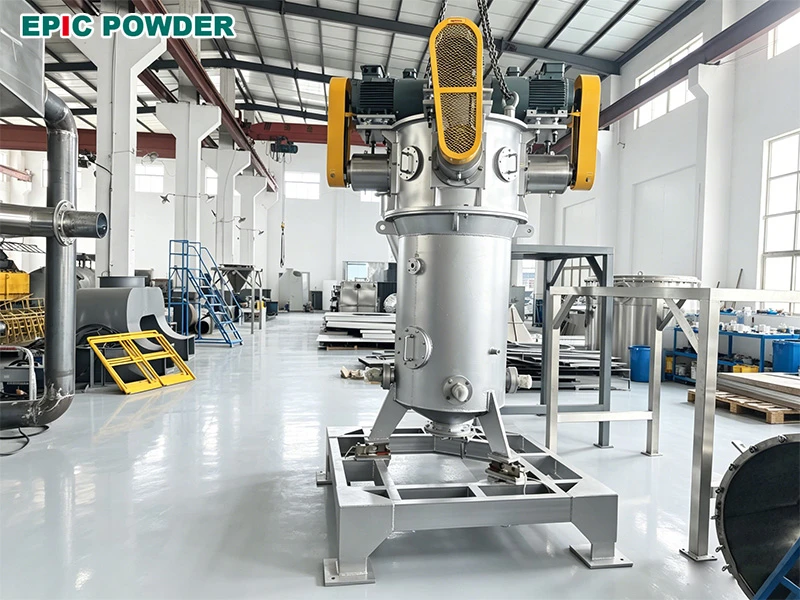
Run-to-failure sounds economical but costs more. A failed nozzle shuts the line down at its worst moment, and the product made during the drift often needs rework. A planned routine needs three habits. First, measure bore diameter with a pin gauge at each scheduled stop, and record the reading beside the accumulated run hours for that material. Second, rotate nozzles between positions when the mill allows it, since wear concentrates where the feed stream runs richest. Third, replace on the logged interval, ahead of the symptom. A nozzle replaced on schedule costs far less than a drifted D97 caught by the customer. Plants that share one mill across materials keep a per-material hour log. The intervals diverge quickly, and that divergence is exactly why one blanket number misleads.
The Energy Cost Behind the Drift
Gas generation dominates the running cost of jet milling, and a worn nozzle attacks that line item twice. The wider bore lowers jet velocity, so the mill recirculates more material to reach the same cut. The compressor then works longer per ton. Meanwhile the operator, seeing a coarse trend, often raises wheel speed or gas pressure to compensate. That response pushes energy consumption further up, while the root cause hides in the bore. The energy optimization guide quantifies how much cost lives in the compressed-air line. Check nozzles before changing any energy setting, since the cheapest fix is usually a bore measurement. Operating conditions interact the same way. The optimal operating conditions reference keeps the pressure and feed rate settings honest while the hardware stays healthy.
A short inspection closes the loop. Measure each bore, photograph the wear pattern, and file both beside the run hours. Over a few campaigns the log turns the table range into your own number, and replacement planning stops depending on guesswork.
Veelgestelde vragen
Can a worn nozzle be repaired?
Bore wear removes material, so nozzles leave service as replacements. Some designs accept replaceable carbide or ceramic inserts. Those renew the bore at a fraction of the full part cost.
Does nozzle wear change the D97 or only the throughput?
Both move together. The wider bore lowers jet velocity, so the mill grinds less efficiently. The cut drifts coarser at unchanged settings, and hourly output falls for the same reason.
How often should bores be measured?
Measure at every scheduled stop. Add an extra measurement whenever the D97 or the gas bill drifts against the baseline. Abrasive materials justify shorter measurement intervals than soft ones.

Bedankt voor het lezen. Ik hoop dat mijn artikel je helpt. Laat hieronder een reactie achter. Je mag ook contact EPIC Poeder online klantvertegenwoordiger Molly voor verdere vragen.”
— Emily Chen, engineer