
La manipulation de poudres inflammables et explosives, telles que les additifs, les catalyseurs et les matériaux pyrotechniques, présente des risques importants pour la sécurité. Les accidents industriels soulignent généralement l'importance cruciale d'une conception adéquate des équipements et des systèmes de manutention. Ces incidents sont imputables à des procédés de fabrication inadéquats, à des matières premières de qualité inférieure et à un choix inapproprié des équipements de convoyage.
Pour les professionnels du traitement des poudres, la question est claire : comment garantir le transport sûr de ces matières dangereuses ? Cet article explore les options et les meilleures pratiques pour le transport des poudres inflammables, en particulier les systèmes de transport pneumatique.
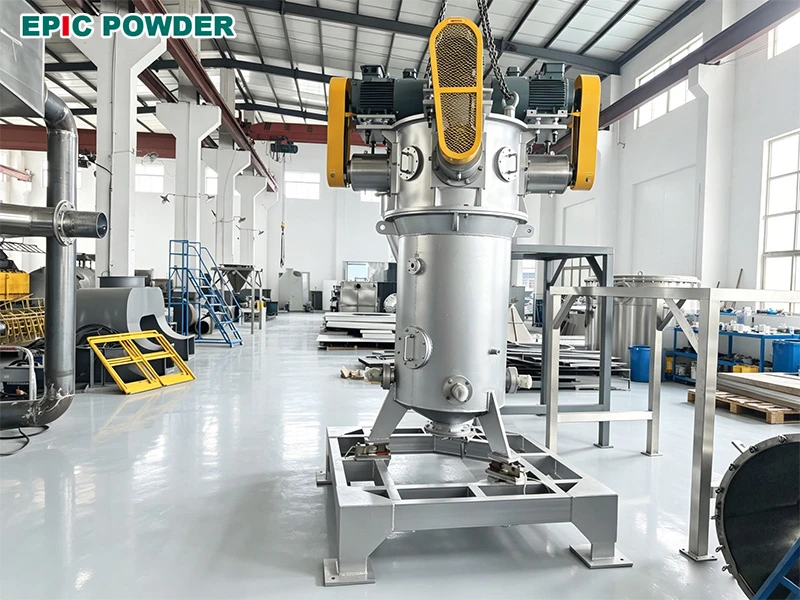
Comprendre les systèmes de transport de poudre
Les systèmes de transport de poudres se répartissent en deux grandes catégories : les convoyeurs mécaniques et les convoyeurs pneumatiques.
- convoyeurs mécaniques Ces convoyeurs comprennent notamment les convoyeurs à bande, les convoyeurs à vis, les élévateurs à godets, les convoyeurs vibrants et les convoyeurs à chaîne. Souvent exposés aux intempéries, ils peuvent générer de la poussière et présenter des risques d'explosion.
- Convoyeurs pneumatiques Ces systèmes utilisent l'écoulement diphasique gaz-solide pour transporter des matériaux dans des canalisations fermées. Ils offrent un haut niveau d'automatisation, une configuration flexible et une excellente étanchéité aux poussières, ce qui les rend idéaux pour le transport de matières dangereuses.
Pour les poudres inflammables et explosives, le transport pneumatique est généralement privilégié en raison de son fonctionnement en circuit fermé, qui minimise les fuites de poussière et réduit les risques d'explosion. Des industries telles que les matériaux pour batteries au lithium, la chimie fine et l'industrie pharmaceutique ont de plus en plus recours aux systèmes pneumatiques pour une manutention en toute sécurité.
Comparaison de différents types d'équipements de convoyage mécanique
| Type de convoyeur | Avantages / Inconvénients et caractéristiques applicables |
|---|---|
| Convoyeur à bande | Généralement utilisé entre deux équipements, ce type de convoyeur nécessite, en cas de virage ou de longueur insuffisante, un raccordement à d'autres convoyeurs. Il ne convient ni au déchargement multipoint, ni aux matériaux pulvérulents ou granulaires susceptibles de provoquer une contamination. Son utilisation est envisageable pour les matériaux peu sensibles à la poussière, et il est généralement recommandé de le concevoir avec un châssis fermé. |
| Élévateur à godets | Généralement adapté au transport vertical de matériaux, son angle d'inclinaison doit en principe être d'au moins 65°. Pour le transport horizontal, il nécessite un raccordement à un convoyeur à bande, un convoyeur à vis, etc. L'alimentation se fait principalement par déchargement monopoint, avec une importante production de poussière. |
| Convoyeur à vis | Le transport s'effectue dans un tuyau, évitant ainsi toute fuite d'air ou de poudre et répondant aux exigences de sécurité et de protection de l'environnement ; structure simple, entretien et fonctionnement faciles, faible coût de fabrication ; le matériau est poussé par la poussée de la vis, avec un frottement important entre la pale de la vis et le carter ; transport généralement horizontal uniquement. |
| Convoyeur à plaques (à tablier) | Généralement adapté uniquement au transport entre deux équipements. En cas d'inclinaison, l'angle ne doit en principe pas excéder 25°. Il s'agit principalement d'un transport à ciel ouvert, ce qui rend difficile la résolution des problèmes de sécurité et environnementaux. |
| convoyeur vibrant | Généralement utilisé pour le transport horizontal de matériaux, avec un angle d'inclinaison allant de –15° à 15°. |
| Convoyeur à racleur | Principalement utilisé pour le transport horizontal, avec un angle d'inclinaison ne dépassant généralement pas 15° ; peut être alimenté et déchargé en plusieurs points. |
| Convoyeur à chaîne tubulaire | Le transport s'effectue dans une canalisation fermée, évitant ainsi la contamination bidirectionnelle entre le matériau et l'environnement extérieur ; le chargement et le déchargement peuvent être réalisés sur des trajets horizontaux ou verticaux, ce qui améliore considérablement l'applicabilité ; l'entraînement par chaîne est généralement de longueur limitée ; le processus de transport repose principalement sur la friction, ce qui peut générer de l'électricité statique. |
N'hésitez pas à demander si vous avez besoin d'ajustements concernant la terminologie ou la mise en forme.
Types de systèmes de transport pneumatique
Le transport pneumatique peut être classé selon son principe de fonctionnement (pression positive, pression négative, transport mixte, transport par glissières pneumatiques et transport par conteneur) et selon ses caractéristiques d'écoulement (phase diluée, phase dense et écoulement de sable). Deux types courants sont :
- Phase diluée (pression négative) : Utilisant une pompe à vide pour créer une dépression et empêcher la fuite de poussière, ce système est simple, sûr et adapté aux courtes distances (moins de 100 mètres) avec plusieurs points d'alimentation. Cependant, son fonctionnement à haute vitesse entraîne une usure accrue et une consommation d'énergie plus importante.
- Phase dense (pression positive) : Utilisant de l'air comprimé ou un gaz inerte pour pousser les matériaux dans des bouchons à faible vitesse, ce système permet un transport longue distance, une capacité élevée, une faible usure et une dégradation minimale du produit. Il peut être conçu avec un système de recirculation de gaz inerte pour prévenir les explosions, ce qui le rend idéal pour le transport de matériaux abrasifs ou inflammables sur de longues distances.
Le choix entre ces options dépend de facteurs tels que les caractéristiques des matériaux, la distance et les exigences du processus.
Considérations de sécurité relatives aux poudres inflammables
Garantir le transport sûr des poudres inflammables nécessite une approche globale :
- Conception du système : Adaptez le système de transport aux propriétés spécifiques du matériau, telles que la granulométrie, la teneur en humidité et l'explosibilité. Une conception appropriée minimise les risques.
- Intégrité des équipements : Inspectez et entretenez régulièrement les tuyaux, les vannes et les composants afin de prévenir les fuites et l'usure. Tout dommage doit être réparé immédiatement.
- Utilisation de gaz inerte : Pour les poudres très réactives, utiliser un gaz inerte (comme l'azote) comme fluide de transport afin de réduire les niveaux d'oxygène et d'éviter les explosions.
- Protection contre les explosions : Incorporer des évents d'explosion, des systèmes d'extinction ou des vannes d'isolement pour atténuer l'impact de toute inflammation potentielle.
- Automatisation et surveillance : Mettre en œuvre des systèmes de contrôle avancés pour surveiller la pression, la température et le débit, afin de garantir un fonctionnement sûr.
Choisir la solution de convoyage adaptée
Pour les poudres inflammables, le transport pneumatique en phase dense avec gaz inerte est souvent le choix le plus sûr, notamment sur de longues distances. Cependant, pour l'alimentation multipoint sur de courtes distances, les systèmes en phase diluée peuvent être efficaces s'ils sont correctement conçus. Poudre épique, Nous sommes spécialisés dans les équipements de pointe pour le traitement des poudres, notamment : broyeurs à jet, broyeurs classificateurs, et classificateurs d'air, et nous comprenons l'importance de la sécurité intégrée dans la manipulation des poudres.
Lors du choix d'un système de convoyage, tenez compte des exigences spécifiques de votre procédé, des risques liés aux matériaux et de votre budget. Consultez des experts pour vous assurer que votre système respecte les normes de sécurité et répond à vos besoins opérationnels.
Conclusion
Le transport sécurisé des poudres inflammables représente un défi complexe qui exige une planification rigoureuse et un équipement robuste. Les systèmes de transport pneumatique, notamment ceux à phase dense, offrent une sécurité et une efficacité supérieures pour les matières dangereuses. En privilégiant la conception du système, la maintenance de l'équipement et l'utilisation de gaz inerte, il est possible de réduire considérablement les risques d'explosion.
Pour des solutions sur mesure et des conseils d'experts, contactez-nous Poudre épique pour découvrir comment nos technologies avancées de traitement et de transport des poudres peuvent améliorer vos opérations en toute sécurité.
Poudre épique

Merci d'avoir lu cet article. J'espère qu'il vous sera utile. N'hésitez pas à laisser un commentaire ci-dessous. Vous pouvez également… contacter EPIC Représentant du service client en ligne de Powder Zelda pour toute autre question.
— Jason Wang, Ingénieur