
The black mass recycling market was valued at USD 15.5 billion in 2025 and is projected to reach USD 65 billion by 2035, expanding at a compound annual growth rate of 15.2%. This growth is driven by the rapid increase in end-of-life lithium-ion batteries from electric vehicles, consumer electronics, and energy storage systems. Recyclers are under pressure to convert these spent batteries back into battery-grade precursors, and black mass refining sits at the center of that effort.
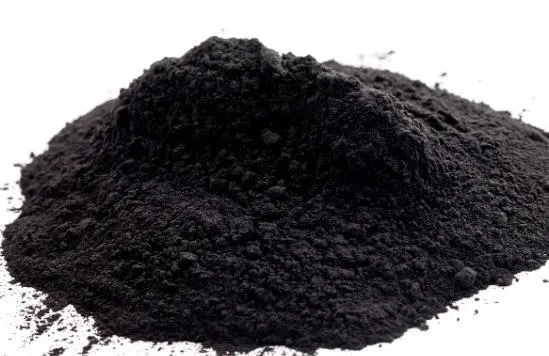
Black mass is the dark, powder-rich mixture produced after batteries are discharged, dismantled, and shredded. It contains the cathode active materials, graphite anode material, copper, aluminum, and residual electrolyte. The way recyclers refine this material determines the purity, recovery rate, and economics of the downstream precursor regeneration process. Hydrometallurgical recycling already accounted for 51.3% of the lithium-ion battery recycling market in 2025, reflecting its strong position for high-purity metal recovery.
What Is Black Mass and Why Does It Matter?
Black mass is the intermediate product generated during the mechanical processing of spent lithium-ion batteries. It consists mainly of cathode active materials such as lithium cobalt oxide, lithium nickel manganese cobalt oxide, or lithium iron phosphate, along with graphite from the anode, fragments of copper and aluminum current collectors, and organic residues from electrolytes and binders. Its exact composition depends on the battery chemistry, manufacturer, and preprocessing method.
NMC black mass typically contains 5–20% cobalt, 5–15% nickel, 2–6% lithium, 2–10% manganese, and 15–25% graphite. LFP black mass contains no cobalt or nickel, so its recoverable value centers on 3–5% lithium and graphite. Industrial black mass produced from mixed cell chemistries has been measured at roughly 40 wt% graphite, 40 wt% metal, and 20 wt% phosphorus and fluorine compounds.
The material matters because it carries the highest concentration of valuable metals in the recycling chain. Recovering these metals at battery-grade purity is the only way to close the loop and feed them back into new cathode precursor production. Poor refining leads to metal losses, contaminated products, and higher chemical consumption downstream.

Hydrometallurgical vs. Pyrometallurgical Precursor Regeneration
Two main industrial routes convert black mass into usable metal products: hydrometallurgy Dan pyrometallurgy. Hydrometallurgical recycling dissolves the metal content in aqueous acid solutions, then separates individual metals through solvent extraction, precipitation, and crystallization. This route typically achieves 92–97% lithium recovery and produces high-purity salts suitable for precursor synthesis. Hydrometallurgy held a 51.3% market share in the EV battery recycling segment in 2025.
Pyrometallurgical recycling uses high-temperature smelting to reduce metals into a cobalt-nickel-copper alloy. The alloy is later refined, often through hydrometallurgical steps, to recover individual metals. This approach handles mixed and contaminated feedstock well, but it loses a significant share of lithium into silicate slag. Lithium recovery in pyrometallurgical routes typically ranges from 50–70%, and energy consumption is roughly three to four times higher per ton than hydrometallurgical processing.
A third approach, direct cathode regeneration, is gaining attention. It attempts to repair the crystal structure of spent cathode active materials instead of dissolving them. The direct cathode recycling market was valued at USD 548.9 million in 2025 and is projected to reach USD 6.74 billion by 2035, growing at a CAGR of 28.5%. This method avoids complete chemical breakdown and could reduce re-manufacturing costs, but it requires a cleaner and more uniform black mass feedstock than conventional routes.
The Black Mass Refining Process Step by Step
Refining begins with safe discharge and dismantling. Spent battery packs arrive in varied states of charge, and uncontrolled disassembly creates fire and thermal runaway risks. Automated discharge systems reduce these hazards before mechanical processing starts.
Thermal pretreatment removes volatile electrolytes, separators, and organic binders. Temperature control is critical. Studies show that polyvinylidene fluoride binders decompose in two stages: partial decomposition begins around 500°C, and complete removal requires roughly 650°C. Removing these binders improves the separation of active materials from current collectors and reduces fluorine contamination in downstream leaching circuits.
Mechanical shredding reduces modules or cells to fragments of about 10–20 mm, a size range that supports efficient downstream separation. The material then moves through magnetic separation, eddy current separation, and density-based sorting to remove steel, copper, aluminum, and plastics. What remains is black mass, which still needs size reduction to expose the active material particles and prepare them for leaching or direct regeneration.
Fine milling reduces black mass to hundreds of microns or below. This step maximizes metal liberation and produces the homogeneous, free-flowing powder that refiners prefer for sampling and leaching. The final particle size distribution depends on the downstream process and the chemistry of the input material.
Why Particle Size Control Is Critical in Black Mass Refining
Particle size directly affects metal recovery and process economics. Smaller particles expose more surface area, which speeds up leaching kinetics and can reduce acid consumption. A study on bioleaching found that reducing particle size improved the extraction of lithium, cobalt, nickel, and manganese, with the highest yields obtained at the finest fractions.
However, over-grinding creates problems. Ductile copper and aluminum foils smear and fragment into the same size class as the cathode coating, embedding metal fines that screens and density separators cannot remove. These fines raise impurity levels, increase reagent use, and lower the quality of the final precursor products. The goal is not simply the smallest possible particle, but a narrow and controlled particle size distribution matched to the separation and leaching steps.
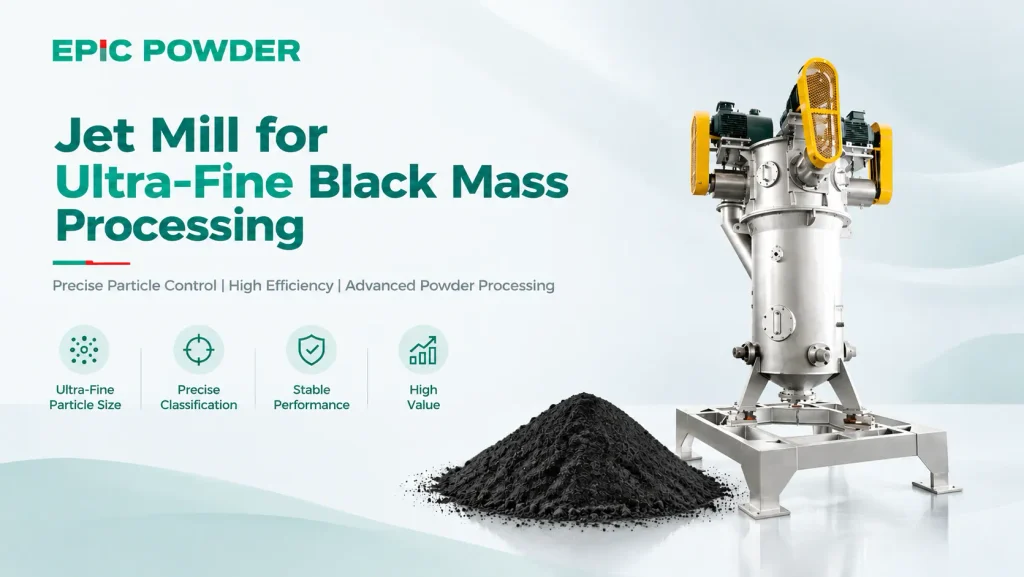
Pabrik jet and air classifiers help achieve that control. Jet mills use high-velocity gas streams to accelerate particles against each other, producing fine powders without the high mechanical wear and contamination associated with ball or hammer mills. Air classifiers separate particles by size and density, returning oversize material for further grinding while collecting the target fraction. Some integrated systems report black mass impurity levels below 1.5% after a single pass.
Key Challenges in Black Mass Refining
Impurities are the biggest obstacle to producing battery-grade precursors. Copper and aluminum enter the black mass from current collectors and from crushing operations. These metals consume leaching reagents, contaminate metal sulfate products, and can cause safety issues during thermal processing. Effective magnetic, eddy current, and density separation before fine milling is the first defense.
PVDF binder residues are another persistent problem. Acid leaching removes metals effectively but leaves fluorine in the graphite fraction. One study reported residual fluorine contents of 1.97–2.25 wt% after acid leaching, showing that chemical treatment alone is insufficient for complete binder removal. Thermal treatment at controlled temperatures or solvent-based binder removal can reduce this contamination before the material reaches downstream processes.
Safety runs through every stage. Spent batteries retain residual charge. Electrolytes are flammable and toxic. Dust from black mass is explosive if not managed. Operations must combine automated discharge, inert atmosphere handling, dust collection, and gas treatment to protect workers and equipment.
Equipment Selection: Milling and Classification for Black Mass
Recyclers need equipment that handles black mass without adding contamination or over-grinding ductile metals. Jet mills are well suited for this task because they grind through particle-on-particle impact rather than metal-on-metal contact. This reduces iron contamination and keeps the product clean. The absence of rotating grinding media also lowers wear and maintenance costs when processing abrasive battery materials.
Air classifiers add the size separation step. They allow operators to set a precise cut point, separating fine black mass from coarse copper and aluminum fragments. Inert gas operation is often necessary because black mass is reactive and can ignite. Nitrogen or carbon dioxide atmospheres suppress combustion while preserving product quality.
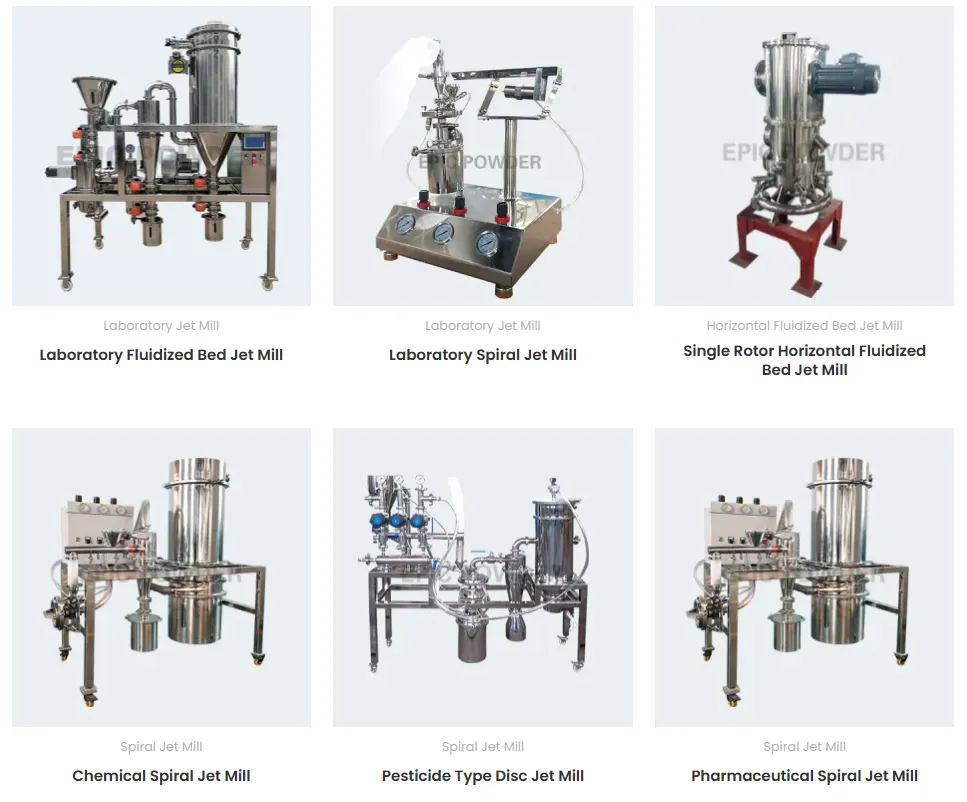
Bubuk Epik designs penggilingan jet and air classification systems for battery material applications. Our jet mills produce narrow particle size distributions and operate under inert gas, making them suitable for black mass size reduction before hydrometallurgical leaching or direct regeneration. Integrated grinding-classification units reduce the number of transfer steps, limit contamination, and improve throughput consistency. For recyclers building precursor regeneration lines, matching the milling and classification equipment to the black mass quality is as important as selecting the leaching chemistry.
Future Trends in Black Mass Refining and Precursor Regeneration
Regulation is tightening. The EU Battery Regulation requires recovery rates of 90% for cobalt, copper, lead, and nickel by the end of 2027, rising to 95% by the end of 2031. Lithium recovery targets are 50% by the end of 2027 and 80% by the end of 2031. Minimum recycled content rules will follow, requiring 6% recycled lithium and 6% recycled nickel in new EV batteries by 2031, and 12% lithium and 15% nickel by 2036. These rules push recyclers toward higher recovery and higher purity.
Direct regeneration is likely to grow fastest. Its market is expanding at a CAGR of 28.5%, well above hydrometallurgy and pyrometallurgy. This growth depends on producing cleaner black mass with lower copper, aluminum, and binder content, which reinforces the importance of upstream refining and particle size control.
Automation and process integration are also advancing. Recyclers are connecting shredding, thermal treatment, milling, classification, and leaching into continuous lines with real-time monitoring. The objective is consistent black mass quality, lower unit costs, and the ability to handle mixed feedstocks at industrial scale.
Kesimpulan
Black mass refining is the bridge between spent batteries and battery-grade precursor regeneration. The composition and particle size of refined black mass determine recovery rates, reagent consumption, and product purity across hydrometallurgical, pyrometallurgical, and direct regeneration routes. Hydrometallurgy leads today because it delivers high lithium recovery and high-purity products, but pyrometallurgy remains relevant for complex feedstock, and direct regeneration is growing rapidly. As regulations raise recovery targets and recycled content requirements, recyclers will need tighter control over particle size, lower contamination, and safer processing. Penggilingan jet and air classification are key tools for meeting those requirements.
Bubuk Epik
Epic Powder designs grinding and classifying systems for minerals, chemicals, food, and pharmaceuticals. With more than 20 years of powder processing experience, we match the right mill to your target particle size and capacity.
Need a size reduction or classification solution for black mass? Epic Powder supplies pabrik jet and air classification systems engineered for battery recycling applications. Hubungi kami and we will recommend a tested solution for you.
Pertanyaan yang Sering Diajukan
What is black mass in battery recycling?
Black mass is the dark powder mixture produced by shredding and mechanically processing spent lithium-ion batteries. It contains cathode active materials, graphite, copper, aluminum, and residual organic compounds.
What are the main methods for precursor regeneration?
The three main routes are hydrometallurgy, pyrometallurgy, and direct cathode regeneration. Hydrometallurgy dissolves and separates metals chemically. Pyrometallurgy smelts metals into an alloy. Direct regeneration repairs the crystal structure of spent cathode materials.
How does particle size affect black mass refining?
Finer particles improve metal liberation and leaching kinetics, but excessive grinding embeds copper and aluminum fines into the black mass. Controlled particle size distribution is essential for high recovery and low contamination.
Why is jet milling used in black mass processing?
Jet mills reduce particle size through particle-on-particle impact, which minimizes metal contamination and wear. They also operate well under inert gas, an important safety feature for reactive black mass.
What purity levels are required for regenerated battery precursors?
Battery-grade precursors typically require metal impurities such as copper, iron, and aluminum to be at parts-per-million levels. The exact specification depends on the cathode chemistry and the end customer’s quality agreement.

Terima kasih sudah membaca. Semoga artikel saya membantu. Silakan tinggalkan komentar di bawah. Anda juga bisa hubungi EPIC Perwakilan pelanggan online Powder Zelda untuk pertanyaan lebih lanjut.”
— Jason Wang, Insinyur