
تحتوي القهوة المحمصة على أكثر من ألف مركب معروف، مثل المركبات العطرية المتطايرة والفيتامينات والمعادن ومضادات الأكسدة. يبقى معظمها محبوسًا داخل حبة البن حتى يتم طحنها. كلما كان الطحن أنعم، زادت كمية هذه المكونات المنطلقة، وتحسنت نكهتها. تكمن المشكلة في أن الطحن يُطلقها أيضًا في الهواء. بمجرد كسر حبة البن، تبدأ مركباتها العطرية الأكثر تطايرًا بالتبخر، ويتسارع معدل الفقدان بشكل حاد مع ارتفاع درجة الحرارة. تشير الأبحاث حول حركية تدهور النكهة إلى أن القهوة المطحونة قد تفقد ما يقارب 84% من تأثيرها العطري المميز خلال الساعة الأولى بعد الطحن. هذا هو التحدي الرئيسي الذي يواجه كل مُصنِّع قهوة: الطحن بدرجة كافية لاستخلاص كل ما هو قيّم، دون السماح للحرارة والأكسدة بإتلافه قبل حتى تحضير فنجان القهوة. طاحونة نفاثة يحل التوتر على كلا الجانبين.

كيف تعمل مطحنة القهوة النفاثة؟
أ طاحونة نفاثة يُقلل هذا النظام حجم الجسيمات دون الحاجة إلى سكاكين أو مطارق أو مثاقب أو مناخل أو وسائط طحن. يُضخ هواء مضغوط مُصفى ومُجفف (أو غاز خامل مثل النيتروجين) عبر فوهة لافال إلى حجرة الطحن. تلتقي تيارات غازية متعددة عالية السرعة في المركز، وتُدفع الجسيمات العالقة في التدفق لتصطدم ببعضها البعض. تطحن المادة نفسها: حيث يؤدي التصادم المتكرر بين الجسيمات، والتآكل، والقص إلى تفتيتها، بينما يحمل تدفق الهواء الجزيئات الدقيقة إلى أعلى نحو عجلة تصنيف عالية السرعة. تمر الجسيمات التي يقل حجمها عن الحجم المحدد وتُجمع في إعصار أو مرشح؛ أما الجسيمات الأكبر حجمًا فتسقط مرة أخرى في منطقة الطحن لتمر مرة أخرى.
لأن مطحنة النفث لا تلامس المنتج بأي شفرات ميكانيكية، فإنها لا تُنتج أي مخلفات تآكل تقريبًا ولا تلوثًا معدنيًا. ولأن الغاز يتمدد عبر الفوهة بدلًا من احتكاكه بمجموعة شفرات، فإن العملية باردة بطبيعتها، حيث يُحيط الهواء البارد أو النيتروجين بالمنتج بدلًا من الحرارة الناتجة عن الاحتكاك. هاتان الخاصيتان مهمتان للغاية بالنسبة للقهوة، وهي مادة حساسة للحرارة وسريعة التبخر.
حجم الجسيمات هو المتغير الأول
يؤثر حجم الطحن على عملية الاستخلاص. فالجسيمات الدقيقة تعرض مساحة سطح أكبر للماء، مما يؤدي إلى استخلاص أسرع وأكثر اكتمالاً؛ أما الجسيمات الخشنة فتستخلص ببطء. ولذلك، تتطلب طرق التخمير المختلفة نطاقات أحجام مختلفة.
- القهوة التركية: 100-200 ميكرومتر، مسحوق ناعم يُستهلك معلقًا في الكوب
- الإسبريسو: 200-450 ميكرومتر، استخلاص سريع وعالي الضغط
- فلتر وتنقيط: 300-900 ميكرومتر، خشن بما يكفي للسماح بتدفق الماء دون انسداد.
بالنسبة لهذه الأنواع الاستهلاكية، عادةً ما تكون مطحنة البن التقليدية ذات الأقراص كافية. أما مطحنة البن النفاثة فتُستخدم عندما تتطلب عملية الطحن دقةً أكبر مما تستطيع مطحنة الأقراص الوصول إليه بدقة، وعندما يكون التحكم في حجم الجزيئات معيارًا للجودة بحد ذاته: مثل مساحيق البن سريعة التحضير والقابلة للذوبان، ومكونات البن المستخدمة في تغليف النكهات، ومركزات البن فائقة النعومة.
مطحنة نفاثة ذات طبقة مميعة من هذا النوع مسحوق ملحمي تُنتج هذه التقنية نعومة D97 تتراوح من حوالي 45 ميكرومتر إلى 3 ميكرومتر، مع الحفاظ على توزيع دقيق لحجم الجسيمات. هذا التوزيع الدقيق هو ما يدفع الفنيون ثمنه. في المطاحن التقليدية، تُنتج كل دفعة جزيئات ناعمة وخشنة - تُستخلص الجزيئات الناعمة بشكل مفرط مُسببةً المرارة، بينما تُستخلص الجزيئات الخشنة بشكل غير كافٍ مُسببةً الحموضة. أما مطحنة النفث، المزودة بمصنف داخلي، فتُعيد الجزيئات كبيرة الحجم باستمرار حتى تصل إلى الحجم المطلوب، مما يجعل المسحوق النهائي متجانسًا. دفعة تلو الأخرى، تُنتج نفس الإعدادات نفس النتيجة.
تحافظ درجة الحرارة المنخفضة على الرائحة

تعتمد نكهة القهوة على درجة الحرارة، وتكون المركبات المتطايرة المسؤولة عن الرائحة غير مستقرة أثناء الطحن، حيث تُسرّع الحرارة من فقدانها. ومن القواعد المفيدة في هذا الصدد، تلك المستمدة من الحركية الكيميائية: ففي العديد من التفاعلات العضوية، بما في ذلك أكسدة الرائحة وتلفها، يتضاعف معدل التفاعل تقريبًا مع كل زيادة قدرها 10 درجات مئوية في درجة الحرارة. لذا، فإن الطحن على البارد ليس تحسينًا طفيفًا، بل هو كبح مباشر للآليات التي تُضعف النكهة.
تُحافظ مطحنة النفث على برودة المنتج بفضل تصميمها. يقوم الغاز المضغوط بهذه المهمة؛ فلا يوجد تسخين احتكاكي من الشفرات أو مجموعة المطاحن، ويمكن تزويد الغاز مبرداً. يمكن استبدال الهواء بالنيتروجين تماماً للمنتجات الحساسة للأكسجين أو المنتجات الفاخرة، مما يحمي المواد العطرية من الأكسدة أثناء عملية الطحن. أما بالنسبة للمنتجات الأكثر تطلباً، فإن التشغيل المبرد باستخدام النيتروجين السائل يُهشّم حبة البن بحيث تتكسر بسهولة عند درجة حرارة منخفضة جداً، بينما تبقى الزيوت العطرية مجمدة بدلاً من أن تتبخر.
تؤكد شركة Epic Powder صحة المبدأ نفسه في مختبر اختبار مطاحنها النفاثة. في تجربة طحن حبوب البن المحمصة 100%، المطحونة مسبقًا إلى حجم جسيمات d97 يبلغ 500 ميكرومتر، على مطحنة MQW20 عند ضغط 0.7 ميجا باسكال باستخدام غاز بارد عند درجة حرارة 8 درجات مئوية، أنتجت المطحنة 150 كجم/ساعة بحجم جسيمات D97 يبلغ 25 ميكرومتر، مع الحفاظ على توزيع ضيق لحجم الجسيمات ثابتًا طوال فترة التشغيل. قضية يوضح ذلك النقطتين الهندسيتين اللتين يهتم بهما المشتري: الإنتاجية العالية لمادة غذائية حساسة للحرارة، والتحكم الدقيق في درجة الحرارة الذي يتم تحقيقه ببساطة عن طريق الطحن البارد.
أين يناسب مطحنة القهوة النفاثة
ضع في اعتبارك استخدام مطحنة نفاثة للقهوة عندما ينطبق أي مما يلي:
- القهوة سريعة التحضير والقهوة القابلة للذوبان: مساحيق ناعمة ومتجانسة (عادة أقل من 100 ميكرومتر) تتكتل وتذوب بالتساوي.
- تغليف النكهة والرائحة: تعمل جزيئات القهوة ذات الحجم الميكروني كحوامل ومواد خام للنكهات المغلفة.
- قهوة فاخرة فائقة النعومة: منتجات متخصصة تتطلب طحناً متناسقاً ودقيقاً للغاية يتجاوز ما توفره مطاحن الأقراص بشكل متكرر.
- المنتجات الحساسة للنقاء: الدرجات التي يكون فيها التلوث الناتج عن التآكل المعدني أو الميكانيكي غير مقبول.
بالنسبة لطحن قهوة الإسبريسو أو القهوة المقطرة العادية في المتاجر، لا تُعدّ مطحنة النفث خيارًا اقتصاديًا، إذ إنّ نطاق نعومة طحنها وتكلفة الطاقة فيها مُصمّمان لإنتاج قهوة فائقة النعومة على نطاق صناعي. ويُعدّ اختيار الآلة المناسبة للمنتج القرار الأول للمشتري.
ما الذي يجب تقييمه عند شراء مطحنة قهوة نفاثة؟
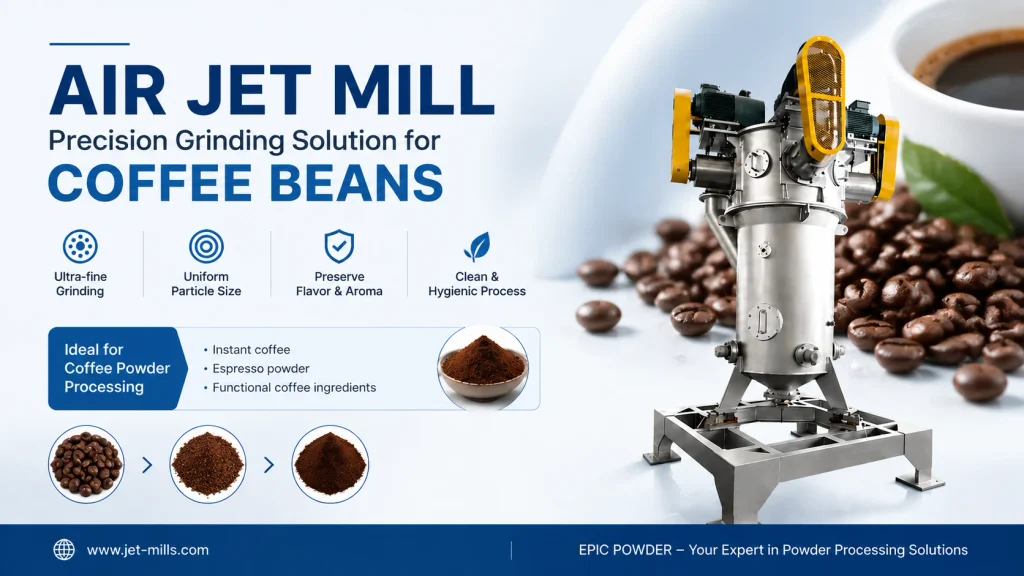
ينبغي على مهندسي المشتريات تقييم ستة معايير، جميعها قابلة للقياس:
- النعومة والتوزيع: تأكيد قيمة D97 التي يمكن تحقيقها (تغطي سلسلة MQW من Epic Powder نطاق 3-45 ميكرومتر) والأهم من ذلك، قدرة المصنف على الاحتفاظ بقيم D90/D10 ضمن نطاق ضيق.
- غاز الطحن: الهواء المضغوط هو المعيار؛ النيتروجين يحمي من الأكسدة والرطوبة. استفسر عن أنظمة الغاز الخامل ذات الدائرة المغلقة والأنظمة المقاومة للانفجار.
- التحكم في درجة الحرارة: تحقق من أن المطحنة تطحن بالغاز البارد أو الغاز المحيط ويمكنها قبول التغذية المبردة للمنتجات الهشة والعطرية.
- ملامسة المواد والنظافة: مصنوع من الفولاذ المقاوم للصدأ المستخدم في صناعة الأغذية، مع الحد الأدنى من المناطق الميتة، وسهولة التنظيف لمنع التلوث المتبادل بين الدفعات والمنتجات.
- الإنتاجية والطاقة: قم بمطابقة معدل استهلاك الطاقة (كجم/ساعة) واستهلاك الهواء (م³/دقيقة) مع حجمك؛ لاحظ أن السعة تتغير مع صلابة المواد الخام والرطوبة والنعومة المستهدفة.
- التآكل والنقاء: تعمل البطانات الخزفية أو البوليمرية (الألومينا، الزركونيا، كربيد السيليكون) الموجودة على المصنف والفوهات على التخلص من التلامس المعدني للحصول على مخرجات عالية النقاء.
مطحنة نفاثات ذات طبقة مميعة أفقية من نوع Epic Powder MQW
تُعدّ سلسلة MQW من Epic Powder مطحنةً أفقيةً ذات طبقة مميعة ونفاثات متقابلة، مصممة خصيصًا لتلبية هذه المتطلبات. تستخدم مطاحن MQW عجلات تصنيف أفقية مدمجة، وبطانات مقاومة للتآكل، وطحنًا متوسطًا بدرجة حرارة منخفضة، ما يجعلها مناسبة للمواد الحساسة للحرارة والمتطايرة مثل القهوة.
تضم هذه السلسلة أحد عشر طرازًا، بدءًا من MQW03 (بمعدل تدفق هواء من 0.3 إلى 10 كجم/ساعة، ومعدل تدفق هواء 3 م³/دقيقة) وصولًا إلى MQW240 (بمعدل تدفق هواء من 4000 إلى 12000 كجم/ساعة، ومعدل تدفق هواء 240 م³/دقيقة). وعلى امتداد هذه السلسلة، تصل دقة حبيبات القهوة إلى D97 من 3 إلى 45 ميكرومتر، مع أحجام تغذية تتراوح من أقل من 1 مم إلى أقل من 3 مم، وضغط تشغيل من 0.6 إلى 1 ميجا باسكال. أهم نقاط التصميم في معالجة القهوة هي:
- الطحن الذاتي عن طريق تصادم الجسيمات يقلل من تآكل المعدات وتلوث المنتج.
- الطحن بدرجة حرارة منخفضة وبدون استخدام وسائط يحمي المركبات العطرية المتطايرة والزيوت الحساسة للحرارة.
- خيارات الدائرة المغلقة للغاز الخامل ومقاومة للانفجار التعامل مع المنتجات المعرضة للأكسدة والممتصة للرطوبة.
- بطانات من الألومينا والزركونيا وكربيد السيليكون توفر عجلة التصنيف والفوهات وأجزاء التلامس الأخرى مخرجات خالية من المعادن وعالية النقاء.
- عجلات تصنيف أفقية توفر تحكمًا دقيقًا في المساحيق منخفضة الكثافة، مما ينتج عنه منتجات أدق باستمرار.
بالنسبة للفرق الفنية، توفر شركة Epic Powder تقارير طحن تجريبي وتحليل حجم الجسيمات، مما يتيح لكم التحقق من نعومة وتوزيع مسحوق البن الخام قبل الشراء. أما بالنسبة للمشترين، فتتوفر نماذج تتراوح من كميات المختبرات والتجارب الأولية إلى آلاف الكيلوغرامات في الساعة، مع دعم تكوين يتناسب مع حجم الجسيمات والإنتاج المستهدف.
لمناقشة مطحنة القهوة النفاثة لمنتجك، اطلب اختبار طحن مجاني أو استشر مهندسينا.
الأسئلة الشائعة
ما هي مطحنة القهوة النفاثة؟
مطحنة القهوة النفاثة هي مطحنة نفاثة ذات طبقة مميعة مصممة خصيصًا للقهوة ومكوناتها. تستخدم هذه المطحنة هواءً مضغوطًا عالي السرعة أو نيتروجينًا لطحن الجزيئات مع بعضها البعض، مما يحقق نعومة فائقة تصل إلى مستوى الميكرون عند درجة حرارة منخفضة.
هل يمكن لطاحونة نفاثة أن تطحن القهوة بشكل أنعم من طاحونة ذات شفرات مخروطية؟
نعم. عادةً ما تتوقف مطحنة البن ذات الأقراص عند حجم حبيبات يتجاوز 100 ميكرومتر، بينما تصل مطحنة النفث ذات الطبقة المميعة إلى حجم حبيبات يتراوح بين 3 و45 ميكرومتر (D97) مع توزيع دقيق. تستهدف مطحنة النفث تطبيقات القهوة فائقة النعومة والقهوة سريعة التحضير في الصناعة، بدلاً من طحن الإسبريسو أو القهوة المقطرة للاستخدام اليومي.
هل يؤدي الطحن النفاث إلى تسخين القهوة؟
لا. يقوم الغاز المضغوط بعملية الطحن ويمكن تزويده بارداً؛ فلا يوجد تسخين ناتج عن الاحتكاك. كما أن استخدام النيتروجين أو التشغيل المبرد يقلل من الحرارة والأكسدة بالنسبة للمنتجات الحساسة للرائحة.
كم تبلغ تكلفة مطحنة القهوة النفاثة؟
تتفاوت التكلفة تبعًا للإنتاجية والتكوين، حيث يؤثر حجم النموذج واستهلاك الهواء وخيارات الغاز الخامل أو المقاومة للانفجار على السعر. ويتمثل المسار الاقتصادي للحصول على دقة وسعة ثابتتين في مراجعة التكوين بما يتناسب مع حجم الجسيمات والكمية المستهدفة.
مسحوق ملحمي
مسحوق ملحمي, خبرة تزيد عن 20 عامًا في صناعة المساحيق فائقة النعومة. نسعى جاهدين للمساهمة في تطوير هذه الصناعة، مع التركيز على عمليات التكسير والطحن والتصنيف والتعديل. اتصل بنا للحصول على استشارة مجانية وحلول مصممة خصيصًا! فريقنا من الخبراء ملتزم بتوفير منتجات وخدمات عالية الجودة لتعظيم قيمة عمليات معالجة المساحيق الخاصة بك.

شكرًا لقراءتكم. آمل أن يكون مقالي مفيدًا. يُرجى ترك تعليق أدناه. يمكنك أيضًا اتصل بـ EPIC ممثل خدمة العملاء عبر الإنترنت زيلدا "لأي استفسارات أخرى."
— إميلي تشين،, مهندس